Most advice on hairstyles for long faces says to add width and avoid height, but that shortcut leaves out hair texture, density and the way a cut is worn between appointments. A long or oblong face can look elegant with sleek length, broad waves, a fringe or a short crop. The useful decision is where the haircut creates its strongest horizontal and vertical lines, and whether those lines still appear after an ordinary wash rather than a professional blow-dry.
What to compare first
A long face usually has noticeably more vertical length than width, with the forehead, cheeks and jaw reading as a relatively narrow column. That description is not a diagnosis. A high hairline, long chin, flat crown or very straight hair can strengthen the impression, while glasses, curls and a fringe can interrupt it. Look at the whole arrangement before deciding that the face alone demands a particular cut.
Why width can matter
Pull the hair back without stretching it tightly and face a mirror in level daylight. Notice the distance from hairline to brows, brows to the base of the nose, and nose to chin. You do not need measurements or perfect thirds. You are looking for where the eye travels uninterrupted. Then release the hair into its usual parting. If the sides collapse close to the cheeks while the crown lifts, the current style may be contributing more vertical length than the facial proportions themselves.
Hair density sets practical limits. Fine hair may appear fuller in a shoulder-length cut with a firm perimeter than in very long, heavily layered hair. Dense straight hair can hang as a narrow, solid curtain unless the interior weight is shaped. Waves and curls already create side volume, but their shrinkage can lift the cut shorter and rounder than expected. The same long face haircut will therefore behave differently on each texture.
Width interrupts a long vertical outline, but it should appear at a useful level. Volume near the cheekbones, jaw or shoulders draws the eye sideways. Height concentrated at the crown does the opposite. This is why broad waves, a rounded bob and fuller ends are common haircuts for oblong face shapes. The principle is flexible: the width can come from the cut, natural texture or styling, and each option has a different maintenance cost.
| Source of width | Where it changes the outline | Routine check |
|---|---|---|
| Cheek-level waves | Breaks up the narrow middle of the face | Confirm the bend appears without repeated hot-tool styling |
| Textured bob | Creates a broader perimeter around the jaw | Allow for shrinkage and outward flips at the ends |
| Shoulder-length cut | Places a strong horizontal line near the shoulders | Check whether the ends catch on collars and turn out |
| Side layers | Adds movement beside the cheeks without a blunt edge | Keep enough density so the lower half does not become stringy |
Width should not become a rigid shelf. Layers that all begin at one cheek-level point can create a triangular bulge before narrowing into thin ends. A more connected progression lets movement travel through the sides. On fine hair, that may mean only a few long layers and a fuller baseline. On thick hair, internal shaping can release bulk without leaving obvious short pieces on the surface.
Bangs and forehead balance
A fringe can reduce the amount of visible forehead and place a horizontal element high in the frame. Full bangs have the strongest effect, particularly when they skim the brows. They do not need to be thick or perfectly straight. A soft edge with slightly longer corners can connect to side layers and move more naturally, while a blunt fringe creates a sharper fashion statement.
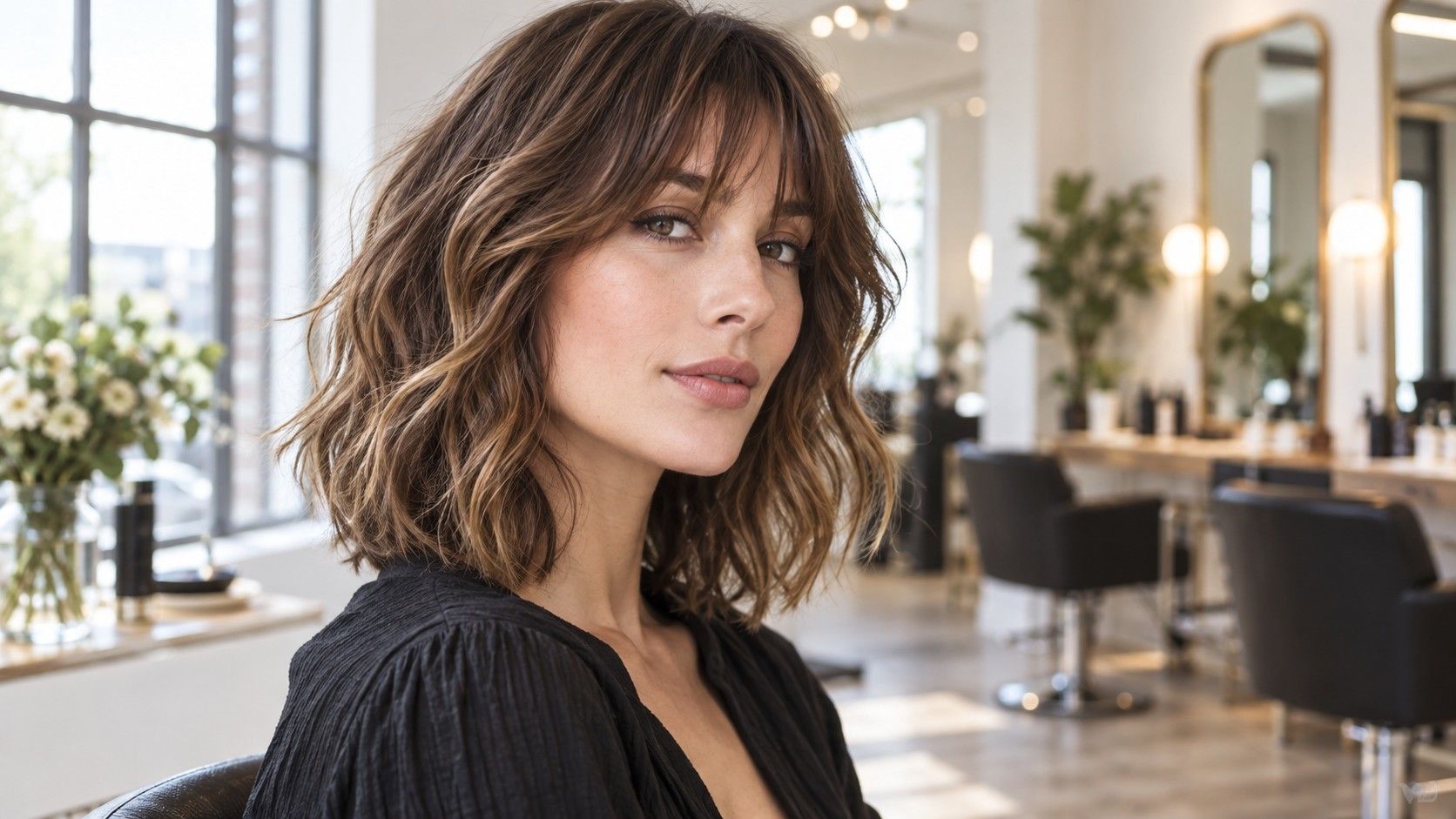
Curtain bangs offer less coverage but more flexibility. Their shortest point opens near the centre, and the outer pieces sweep toward the cheekbones. On a long face, the opening should not climb too high or narrow into two vertical strips, since that can preserve the length the fringe was meant to interrupt. A wider, lower curve usually produces more side movement. Ask the stylist to show how it sits before a large round-brush finish disguises the cut.
Bangs also bring practical friction. They collect skin oil, react quickly to humidity and need more frequent trims than the rest of the hair. Someone who runs daily or dislikes hair near the eyes may prefer cheekbone-length face framing instead. That still creates a break near the upper face without the upkeep of a true fringe. The best option is the one you will wear down rather than pin back every morning.
Medium cuts and textured bobs
Medium length is useful because it can create width without sacrificing every tie-back option. A shoulder-length cut with a fairly solid baseline gives fine hair a stronger edge. Add modest layers around the sides, and the ends can bend outward or form loose waves. If the shortest layers begin too high, however, the crown may gain height while the lower sides lose density. Ask where each layer is intended to sit when dry.
A textured bob concentrates movement closer to the face. A length between the jaw and shoulders can place volume near the cheeks or lower face, depending on the wave pattern. Blunt ends make the silhouette clearer; softly point-cut ends separate more easily. Neither technique is universally flattering. Very straight hair may need a deliberate bevel to avoid hanging flat, while naturally wavy hair often needs less surface layering than a reference photograph suggests.
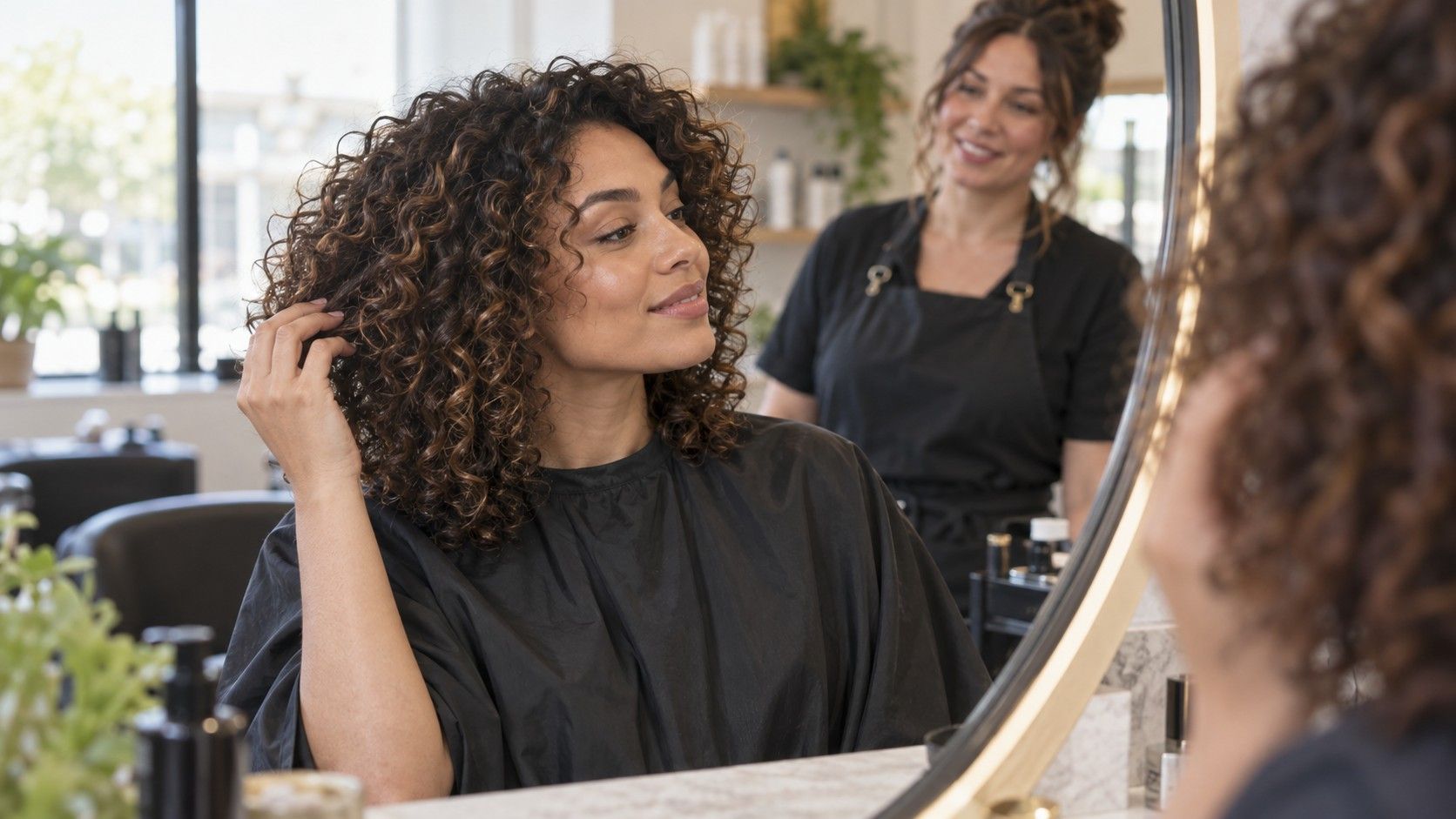
Curly hair requires the cut to respect shrinkage. A curl that reaches the shoulder when stretched may settle near the jaw, and different sections rarely rebound equally. A rounded bob can provide generous side volume around a long face, but the stylist should balance the dry shape rather than chase identical wet lengths. Discuss how the curls look on the second or third day, when the roots may flatten and the sides expand.
Medium cuts also reveal clothing and posture effects that salon photographs ignore. Ends resting on a hoodie or coat collar can turn outward, which may be welcome if more width is desired. The same flip can look untidy with a formal jacket. A bob above the collar avoids that contact; a lob below it carries more weight and may stay straighter. Choose the line with the wardrobe and season in mind, not only the face outline.
Styling details that shift shape
Parting placement changes vertical length faster than a major cut. A strict centre part creates two long, even panels, especially on straight hair. Moving it slightly off centre breaks the symmetry without producing the large root lift of a deep side part. A deep part can add attractive sweep and side volume, but teasing it high at the root may also create extra height. Try each position on dry hair and check it again after several hours.
Waves are most effective when the first clear bend appears beside the cheek or jaw. If the top remains tall and the wave begins only below the shoulders, the face still sits inside a narrow frame. A loose bend made with braids, rollers or a diffuser may be enough. There is little value in choosing a wave-dependent cut if the hair is straight, time is short and hot tools are reserved for special occasions.
Tie-back habits deserve their own test. A high ponytail creates lift and exposes the full face, while a lower ponytail with loose side pieces makes a broader, softer frame. If a fringe is impractical, cheek-length pieces may fall out constantly; longer pieces that reach behind the ear are easier to control. Tell the stylist where helmets, headphones or glasses sit, because repeated pressure can flatten volume exactly where the haircut relies on it.
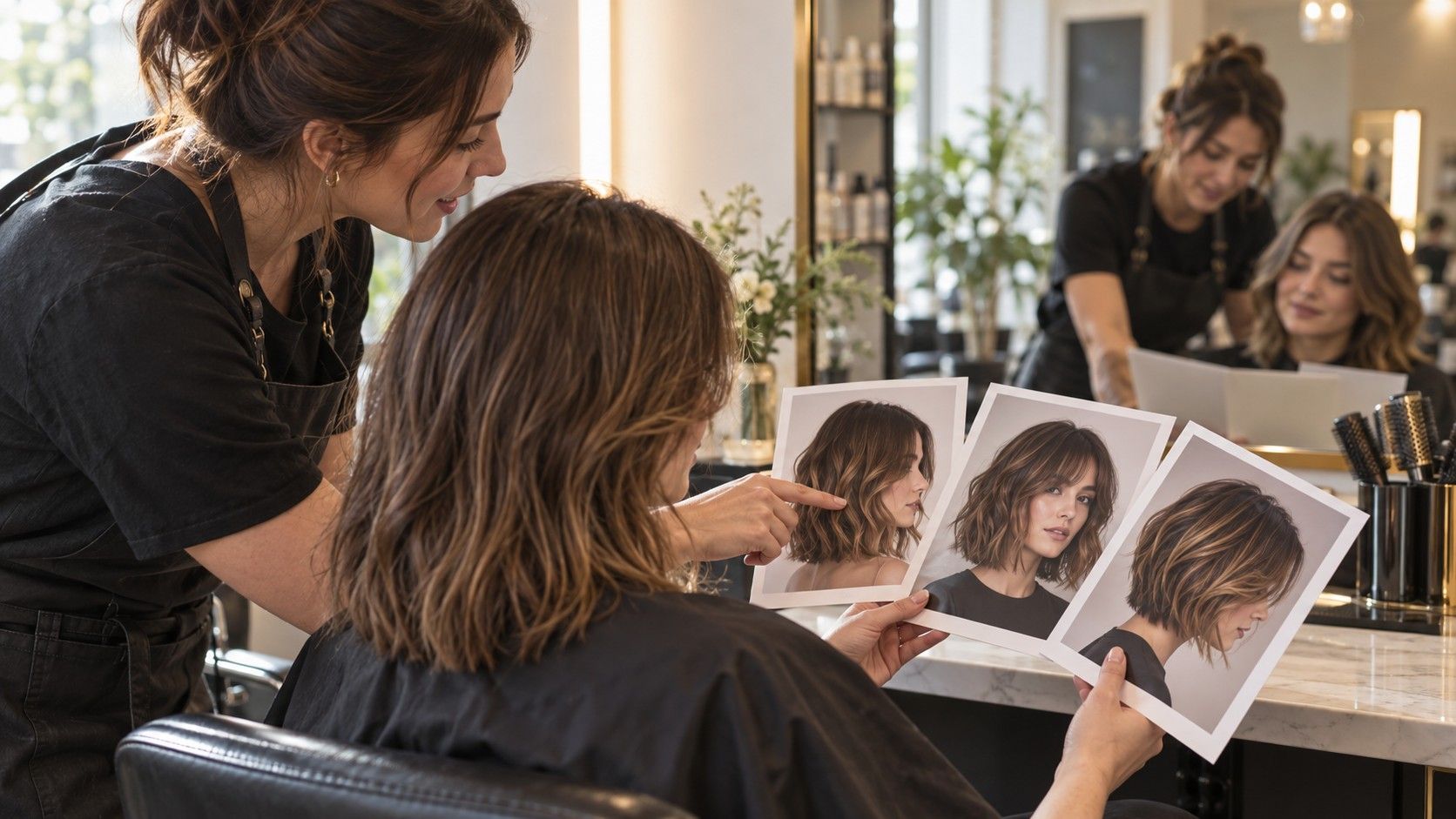
Take realistic salon notes: preferred length, natural drying pattern, maximum styling time and one feature you want the cut to express. Mention width and movement, but avoid demanding that every vertical line disappear. Long, sleek hair can still suit a long face when it is intentional, just as a broad bob can feel wrong if it fights the texture. A successful cut changes the silhouette enough to support your taste and remains recognisable after you style it yourself.