An oval face is often presented as the easy case: balanced proportions, softly curved jawline, almost any haircut permitted. That sounds liberating until every recommendation becomes "anything works." It does not. Hair density, texture, hairline and daily styling still decide whether a cut feels sharp, flat, bulky or demanding. The useful way to compare hairstyles for oval faces is not to protect supposedly ideal proportions. It is to choose which feature, texture or part of your routine the haircut should make more visible.
Why an oval label is not a blank cheque
First check whether the label describes the face you actually see. An oval face is generally longer than it is wide, with a forehead and jaw that taper without a strong corner. Many faces sit between oval, oblong, heart and diamond shapes. Pull the hair back gently, stand several steps from a mirror and compare the forehead, cheekbones and jawline. Do not use a close selfie alone; a phone lens at arm's length can stretch the centre and change apparent proportions.
Compare short cuts by their direction and upkeep
Then decide what you want to emphasise. A slick pixie exposes the forehead, ears and jaw. A cheekbone-length fringe draws attention to the eyes. A blunt bob creates a firm perimeter near the lower face, while long uninterrupted hair makes the entire outline feel more vertical. These are design choices, not ways to preserve a correct oval. If you like the length of your face, you can repeat it. If you prefer a more compact impression, width and horizontal lines are available.
The jawline also changes what a perimeter does. A bob ending exactly at the jaw can underline it; an end point above or below creates a different frame. Neck length, shoulder width and posture influence the total silhouette. This is why two people with oval faces can react differently to the same cut. Face shape narrows the discussion, but it cannot replace looking at the whole person.
A pixie cut offers a clear view of the face and puts every decision near the roots. A textured top with short sides creates upward movement, while a softer pixie with longer pieces around the ears can widen the silhouette. The best version depends on growth pattern. Swirls at the crown, a low nape hairline or a strong front cowlick may determine whether the cut settles naturally or needs paste and a dryer each morning.
Maintenance is the trade-off that short-cut photographs rarely show. A precise crop may need reshaping every four to six weeks, even though washing and drying take minutes. As it grows, weight gathers around the ears and nape before the top becomes long enough to rest differently. Ask the stylist to describe that stage and show how the fringe can be directed when it gains two centimetres. If salon visits are infrequent, choose a softer outline that can expand without immediately looking accidental.
A short bob shifts the work from root direction to perimeter. Ending between the ear and jaw can place a strong line across the face and make an oval outline feel more compact. Straight, dense hair may support a crisp geometric edge. Fine hair can benefit from a blunt base, though too much internal layering may leave it transparent. Thick waves may require carefully placed weight removal so the cut does not form an unintended triangle.
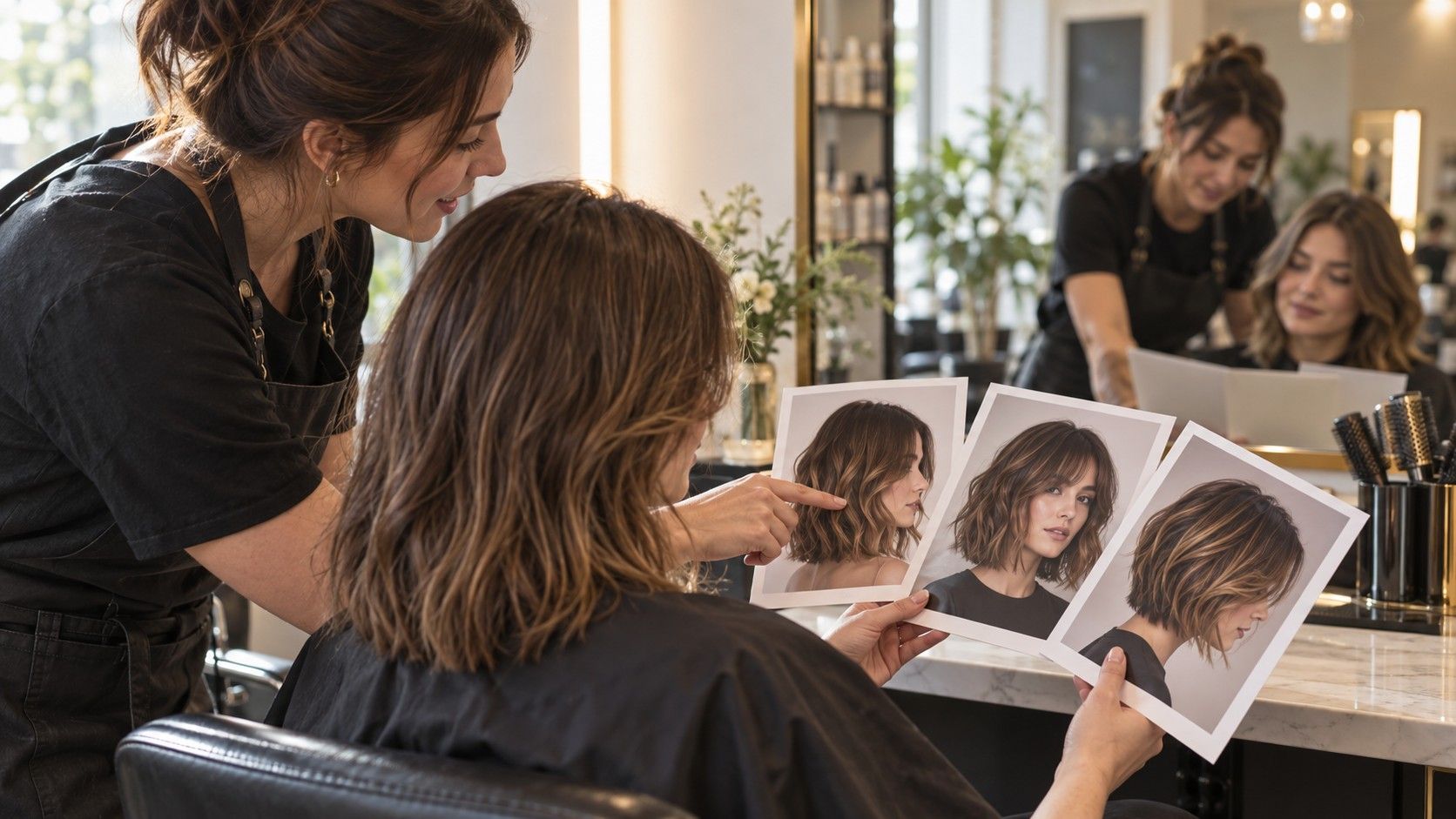
For a first major cut, preserve a small margin. A bob can always be refined shorter after it is dried in its natural texture. The reverse requires months. Bring a photograph of the desired front, but also find a side and back view. Many haircuts for oval face references communicate the fringe and jawline while hiding the graduation, undercut or stacked back that actually creates the silhouette.
Make medium and long hair do more than hang safely
Collarbone length is frequently called safe because it can be tied, waved or worn straight. Safety becomes dullness when the cut has no answer to the hair's density. Fine straight hair may look strongest with a relatively clean edge and restrained face framing. Dense hair can carry more layering, but the location matters: too many short layers create width high on the head, while a heavy one-length perimeter can pull waves flat at the roots.
Long layers should create a visible route through the hair. On straight texture, pieces beginning near the cheekbone or jaw can connect the face to the longer perimeter. On waves, layers release bend and prevent all the volume collecting at the bottom. On curls, dry shrinkage must be included in the plan; a layer cut at chin height while wet may spring toward the cheek. Ask where the shortest piece will sit on a normal air-dried day.
A middle part reinforces symmetry and leaves both sides of an oval face open. It can look clean with a blunt lob or relaxed with long layers. It is not compulsory. An off-centre part gives one side more root lift and can soften a perfectly even outline. A deep side part creates stronger diagonal movement, although it may demand more product or pinning on the lighter side. The natural part usually offers the lowest-maintenance clue.
| Cut direction | What it highlights | What to test first |
|---|---|---|
| Blunt collarbone cut | Density at the perimeter and a clean jaw-to-shoulder line | Whether the ends flip when they touch the shoulders |
| Long face-framing layers | Cheekbones, jawline and movement through the front | Whether the shortest pieces still fit your ponytail |
| Rounded layers | Natural wave or curl volume around the head | Dry shrinkage and the widest point of the finished shape |
| Long one-length hair | Length, shine and a strong uninterrupted surface | Root flatness, drying time and condition of the ends |
Test a fringe before letting it control the cut
A fringe changes the visible proportions more quickly than almost any other element. Blunt bangs shorten the apparent forehead and create a strong horizontal edge. Wispy bangs leave skin visible and feel lighter, but they can separate into thin strands on an oily forehead. Curtain bangs open through the centre and connect easily to layers, while a side-swept fringe introduces a diagonal line. Each option can work on an oval face; the practical costs are different.
Start with the hairline. A cowlick may lift one corner of a blunt fringe, and a low growth pattern can make the fringe denser than expected. Fine hair taken from too far back may leave the temples sparse. On curls, the dry length is the only trustworthy length. Ask the stylist to begin longer, dry the section, and adjust gradually. A few extra millimetres matter when the edge sits near the eyebrows.
Consider the second month. A full fringe may need trimming every three to five weeks to stay above the eyes. Curtain bangs can be pushed aside as they grow, but the shorter centre can still require a quick morning reset. If you exercise daily or live in humid weather, expect the fringe to separate or curl differently. That is not a reason to reject it; it is a reason to decide whether you enjoy the small routine it creates.
Choose for your routine rather than protecting a label
The strongest oval face haircuts begin with constraints that have nothing to do with geometry. How much time can you spend styling? Do you air-dry, diffuse or use a round brush? Must the hair fit under a helmet, stay behind the ears or form a secure ponytail? A cut that answers those questions will feel more flattering because it behaves well, not because it follows a diagram.
Bring the stylist two kinds of evidence: reference images with similar texture and photographs of your own hair on an ordinary day. Explain exactly what appeals to you in each reference, such as the weight at the ends, exposed jawline or movement near the eyes. Also name what you dislike. "I want a bob" is broad; "I want a clean perimeter below the jaw, enough length to tuck, and no stacked back" can be translated into a cut.
Agree on landmarks before cutting. Point to the jaw, collarbone or shoulder rather than relying on "short" and "medium." Ask where the shortest layer will land dry, whether density will be removed internally, and what the style looks like without heat. If the answer depends on twenty minutes with a flat iron and you normally air-dry, the mismatch is already visible.
Avoid changing every variable during an uncertain appointment. Moving from long hair to a pixie with a new colour and heavy fringe may be exciting, but it leaves no simple adjustment if one element feels wrong. Test a parting, add longer face framing, or move first to a collarbone cut. Once you know how the new balance feels during work, exercise and a normal wash, the next decision becomes specific instead of theoretical.