A round face is usually described by a curved jawline and similar width and length, but that label leaves out the details that actually determine how a haircut behaves. Hairline, cheek width, neck length, density and natural texture can make the same bob look entirely different on two people. Good hairstyles for round faces do not disguise a face or force it toward somebody else's ideal. They decide where the eye meets movement, where volume sits and whether the cut remains convincing after the salon finish has disappeared.
Use proportion instead of obeying a face-shape rule
Start by checking the outline with the hair pulled back loosely, not scraped flat. Look at the front in daylight and then at a photograph taken from a few steps away. A close phone selfie can widen the centre of the face because of lens distortion. What matters is not proving that the face is perfectly round; it is noticing whether the cheeks are the widest point, whether the jaw is soft or defined, and which features you want the cut to frame.
Choose a length by watching where the perimeter lands
The familiar instruction to "make a round face look longer" is too crude. Some people like a compact, graphic shape that repeats the curve of the cheeks. Others prefer vertical movement from a side part, longer front pieces or height at the crown. Both can work. The decision is about emphasis. A clean chin-length bob creates a strong horizontal line; a collarbone cut with staggered ends lets the eye travel downward. Neither is a correction, and neither produces the same effect on every texture.
Check the profile as well as the front. Crown volume can create lift in a photograph, yet an over-teased crown may feel formal and collapse by midday on fine hair. Fullness behind the jaw can balance the side view, while heavy volume exactly beside the cheeks makes that area more prominent. If you enjoy that softness, keep it. If you want a narrower visual route through the centre, move the fullest point above the cheekbone or below the jaw.
For many haircuts for round face searches, the useful difference is not short versus long but where the strongest line sits. A bob ending at the fullest part of the cheek repeats that width. This can look deliberate and modern when the perimeter is crisp. If you want more downward movement, shift the line toward the jaw or a few centimetres below it, and ask for front pieces that pass the cheek rather than stopping directly beside it.
A long bob is popular because it provides a visible shape without giving up tying options. Around the collarbone, the ends may rest neatly or flip outward when they hit the shoulders. That flip is not automatically a flaw, but it should be expected. On straight fine hair, a modestly blunt perimeter can preserve density. On thick waves, internal weight removal may stop the cut expanding into a shelf, provided the stylist does not thin the surface into frizz.
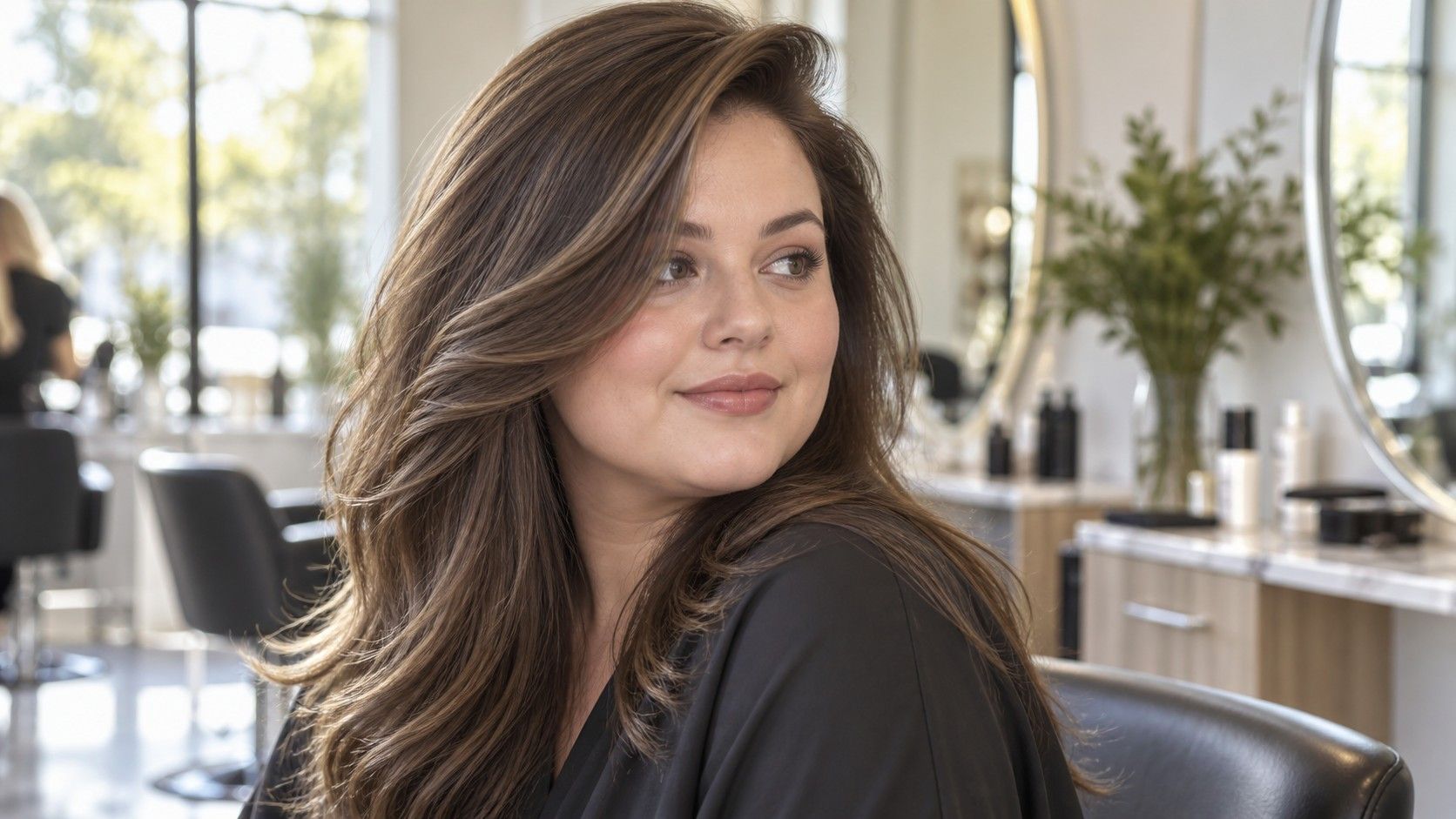
Long hair creates vertical movement only when it has some life through the lengths. A single heavy curtain can cling to the cheeks at the top and collect all its mass at the bottom. Long layers beginning below the chin, a soft U-shaped perimeter or naturally defined waves can keep the eye moving. The shortest layer still needs to reach the ponytail if tying the hair back is part of daily life.
| Placement | Visual effect | Practical check |
|---|---|---|
| Above the jaw | Exposes the neck and makes the outline graphic | Can your texture hold the intended direction without daily heat? |
| At the jaw | Creates a clear line close to the lower face | Decide whether you want the ends tucked, straight or expanded |
| At the collarbone | Adds downward movement and flexible styling | Check for shoulder flip and ponytail length |
| Below the chest | Emphasises length but can become visually heavy | Plan layers around density, drying time and damaged ends |
A short crop can suit a round face just as well as a long cut. The question is where it holds weight. A pixie with texture through the top and cleaner sides reveals the cheekbones and gives the silhouette upward energy. A rounded crop with fullness at the sides deliberately echoes the face. Look for short-cut references with a similar hairline and ear placement, because those details are far more predictive than the model sharing a broad face category.
Place layers and volume where they can do useful work
Layers should solve a behaviour problem: release a wave, lift a flat crown, remove a dense block, or create movement around the face. Asking for "lots of layers" without naming the problem can leave fine hair with transparent ends or thick hair with a halo of short pieces. For vertical movement, start face-framing layers below the widest part of the cheeks and connect them gradually to the length. The exact point may be the chin on one person and the collarbone on another.
Crown volume works best when it comes from cut and root direction rather than constant teasing. Shorter internal layers near the top can support lift on medium or dense hair. Fine hair may respond better to a slightly shorter overall length and a changed parting. Test this before cutting by moving the part while the hair is damp and drying the roots against their usual direction. If the lift lasts only ten minutes, do not build the entire haircut around it.
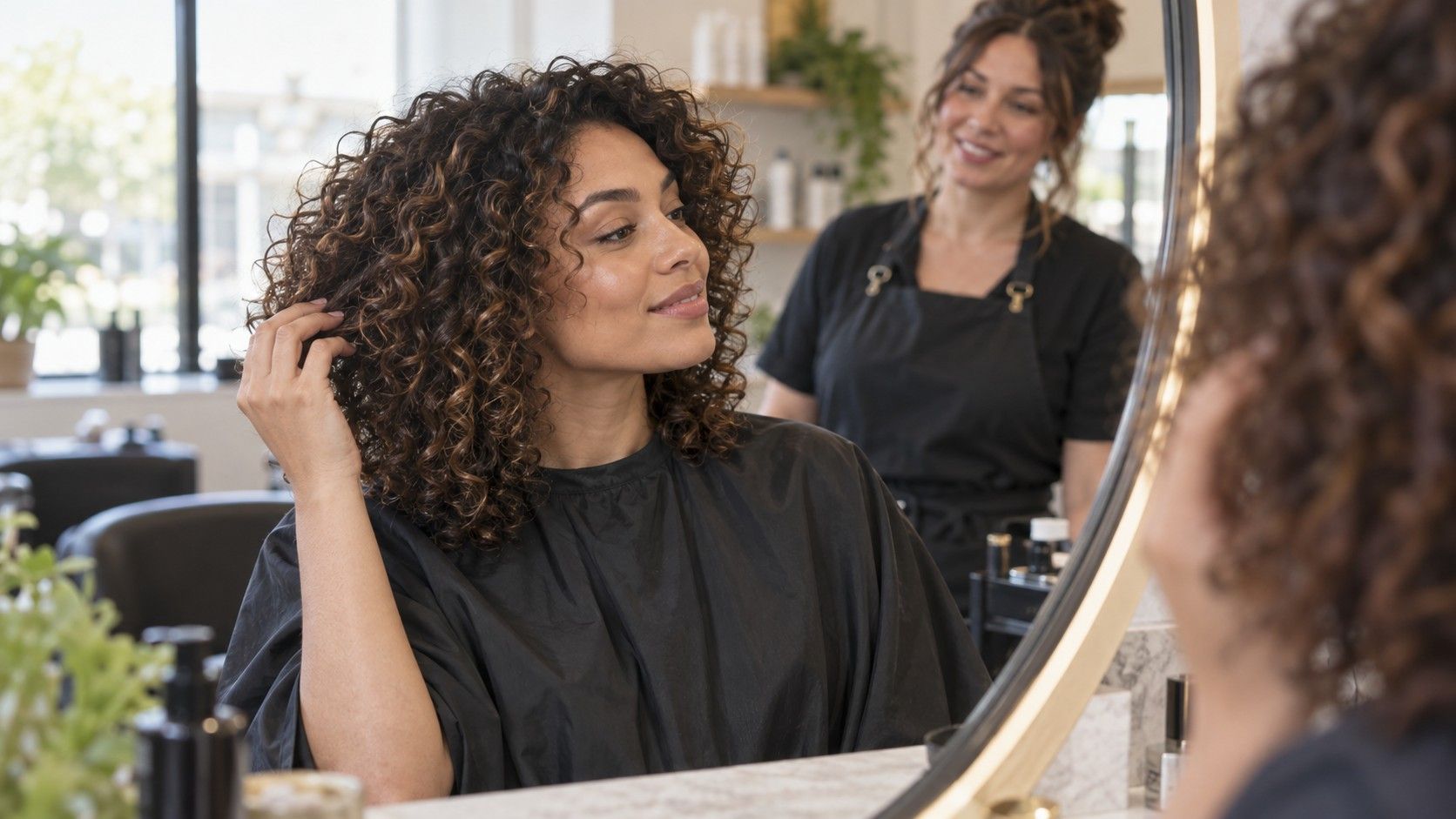
Curly and coily textures need their own map. Shrinkage moves face-framing pieces upward, sometimes by several centimetres, and the widest part of the finished shape may be quite different from the wet salon outline. Ask the stylist to assess the curl pattern dry and discuss whether layers will be cut curl by curl or established on stretched hair. A rounded curly silhouette can frame the face beautifully; if more verticality is wanted, retain length through the lower sections and avoid concentrating every short layer at cheek level.
Test bangs and partings before making them the main event
A middle part is not forbidden for a round face. With longer front pieces, it creates two vertical lines beside the cheeks and can look calm and contemporary. The risk is practical rather than geometric: if the roots naturally split elsewhere, maintaining a precise centre may take daily wetting and drying. An off-centre part gives a similar balanced effect with less argument from a cowlick.
Curtain bangs can open around the eyes and connect to layers near the cheekbones or jaw. The central section should be long enough to separate cleanly, and the outer pieces need enough weight to avoid floating beside the temples. Ask how the fringe will look without a round-brush finish. On wavy hair, a longer starting point leaves room for spring; on fine hair, taking too broad a section can steal density from the sides.
Full bangs create a horizontal line across the forehead, but their weight, width and edge change the result. A narrow, airy fringe leaves more forehead visible. A dense blunt fringe produces a bolder frame and can make the face appear shorter, which may be exactly the graphic effect you want. Clip a section forward or try a temporary fringe piece in ordinary lighting. Check the view from the side and the first day after washing, not just a carefully posed front photo.
Ask the questions that prevent an expensive mismatch
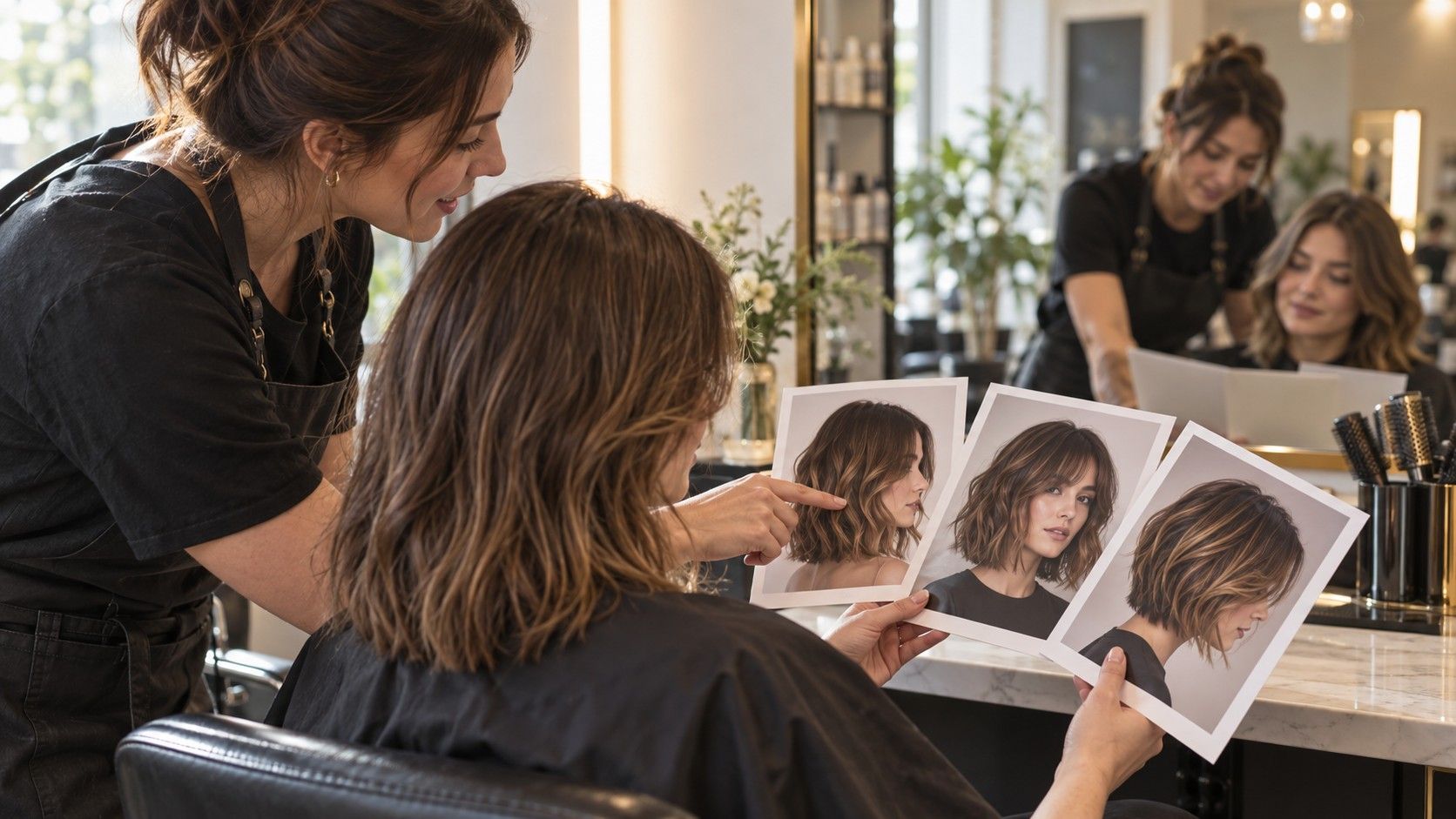
Bring reference photos that show comparable texture and density, plus one image of a shape you dislike. Explain whether your aim is stronger cheek emphasis, more length through the outline, easier air-drying or a cut that fits under a helmet. The stylist can then translate a visual preference into a round face haircut shaped by length placement and weight distribution instead of applying a standard formula for hairstyles for round faces.
Before the first cut, agree on the dry position of the perimeter and shortest face-framing piece. If the hair shrinks, specify whether the reference point is wet or naturally dry. Ask what will happen when the cut grows for eight to twelve weeks. A jaw bob moves through a different awkward stage than a collarbone lob, while short crown layers may lose their intended lift before the perimeter needs trimming.
Request a realistic styling demonstration. If the finish uses a flat iron, several brushes and products you do not own, ask to see the simpler version. Notice the amount and placement of product, the direction of the dryer and whether the front has to be reset each morning. A recommendation is only useful when its maintenance fits your time, budget and tolerance for heat.
Finally, preserve choice where you need it. Keep enough front length to tuck behind the ears if you dislike hair near the eyes. Keep the shortest layer inside a ponytail if workouts matter. Leave a little extra length at the first appointment when moving from long hair to a bob; the shape can be refined once it is dry. Proportion is adjustable, but removed centimetres require patience.