A square face can carry a clean, graphic haircut beautifully, but the same cut may feel severe if its strongest line lands directly beside the jaw. That is why useful advice on hairstyles for square faces starts with proportion, hair behaviour and personal taste rather than a rule about making the face look different. The practical choice is whether to echo the natural structure or offset it with movement, then decide how much daily styling that result will demand.
What to compare in the mirror
Face-shape labels are only a starting point. A square face usually has a forehead, cheek area and jawline that read at similar widths, with a relatively direct line at the lower corners. Hairline, ear position and the length of the face can change that impression. Pull the hair back, look straight ahead in ordinary daylight and notice where the eye pauses. Then release the hair and see whether its natural fall already creates diagonal or curved lines.
Soft cuts versus blunt outlines
The jawline matters, but it should not be treated as something to conceal. Some people like a strong lower outline and feel at home in a precise bob. Others prefer loose ends around the cheeks because they make the whole haircut feel less formal. Compare both reactions. A flattering square face haircut is the one that gives the intended mood when you are standing normally, not the one that fits a diagram traced around a carefully posed photograph.
Hair density is the next check. Fine hair can lose its outline when too many soft layers are cut into it, while dense hair may form a wide shelf if all the weight sits at one level. Curly hair has its own geometry: the visible perimeter changes as curls shrink, separate and settle. A stylist needs to assess the dry pattern, not only the smooth, wet shape held between their fingers.
The choice between softness and structure is not a contest with one correct answer. Soft layers break up a solid perimeter and let the ends move at different heights. Blunt outlines create density and can make fine hair look more substantial. Trouble usually comes from placing the heaviest line without considering where it lands. A one-length bob ending at the widest point of the jaw will repeat that horizontal line; moving it a little above or below changes the effect immediately.
| Cut direction | What it does visually | Practical check |
|---|---|---|
| Long layers below the chin | Adds movement without removing the lower length | Check that the shortest layer can still join a ponytail if that matters |
| Soft collarbone lob | Creates a longer diagonal around the jaw | Ask how the ends behave when air-dried |
| Blunt bob | Echoes facial structure and gives fine hair a strong edge | Choose a line clearly above or below the jaw corner |
| Rounded layered cut | Distributes volume through the sides and ends | Avoid taking so much weight out that dense ends turn wispy |
Long layers work best when they look connected. A very short face-framing piece followed by a large gap to the rest of the length can resemble an accidental shelf. Ask for the front to be cut and checked while it falls naturally. The first bend may sit near the cheekbone, but the stronger bulk should usually continue past the jaw so the eye follows a sloping line rather than stopping at one hard point.
Bangs and parting placement
Bangs change the upper frame, so their width and direction matter as much as their length. A side fringe creates a diagonal across the forehead and joins the side layers without adding a solid horizontal bar. It is often adaptable because it can be pinned back or blended into a side part. The common mistake is cutting it too thin: a few isolated strands separate quickly and expose a line that looks less deliberate than no fringe at all.
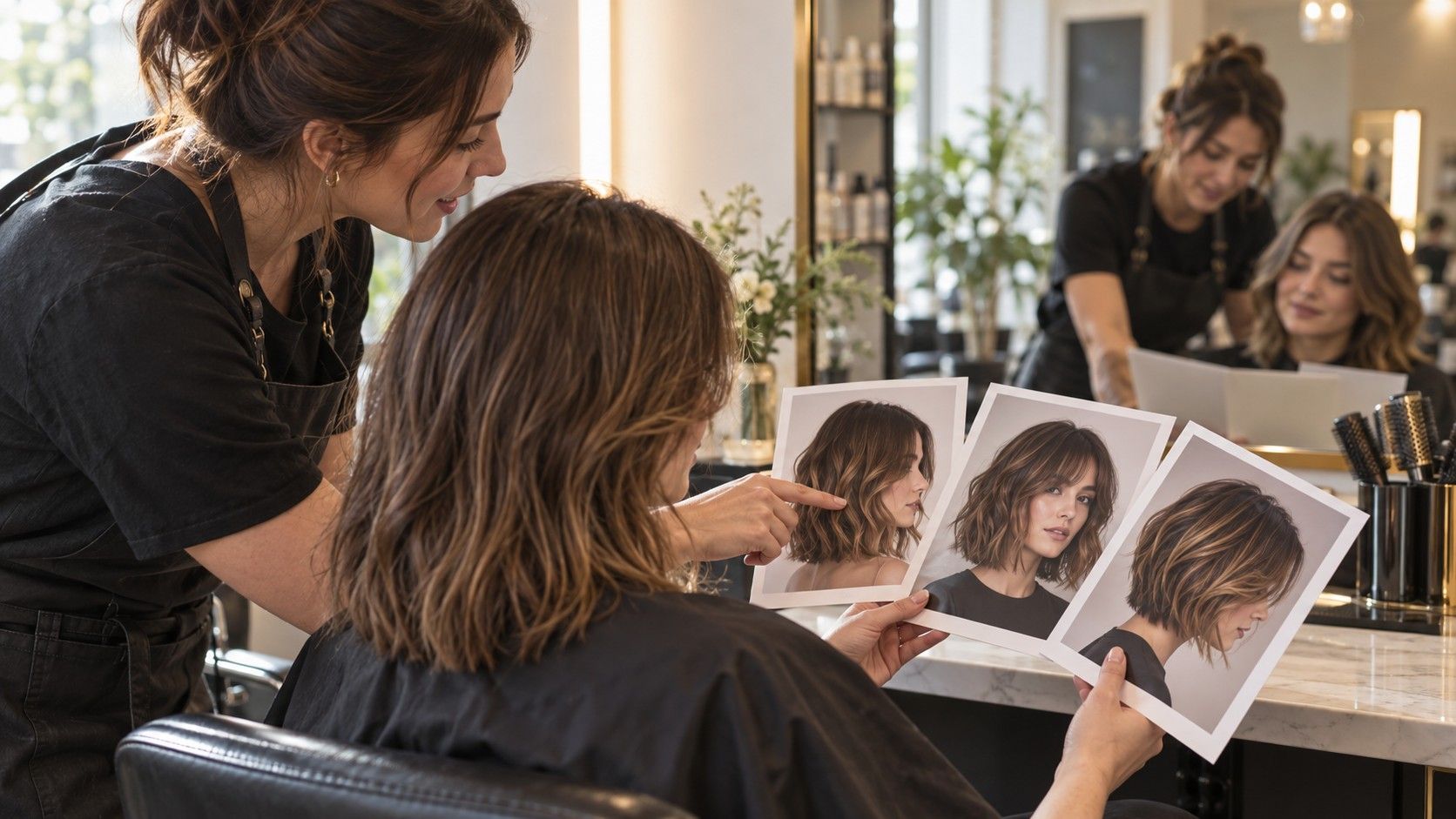
Curtain bangs can suit a square face when the centre opens cleanly and the outer pieces reach toward the cheekbone or below. The curve should connect to the rest of the haircut. If the outer corners stop high and puff outward, they can add width at the temples while leaving the jaw visually separate. Bring photographs of the fringe when styled lightly and when almost straight; highly curled reference images disguise the actual cut.
A full fringe is not forbidden. A slightly airy edge, modest curve or longer corners prevents it from behaving like a ruler across the forehead. A dense, perfectly straight fringe creates a strong graphic frame, which can be exactly right for someone who likes a sharp look. It is simply a high-commitment choice: growth shows quickly, cowlicks become obvious and regular trims are part of the deal.
Short styles worth testing
Short hair puts the outline close to the face, so small changes become visible. A pixie with length on top and softer pieces near the temples creates vertical and diagonal movement. The sides do not need to cover the jaw; they need to look intentional beside it. Leaving a little irregularity around the ears often feels less rigid than a perfectly boxed edge, especially on straight, dark hair where every line is easy to see.
For a bixie or short layered crop, watch the widest point. Volume concentrated directly beside the jaw can make the cut feel bottom-heavy. Moving fullness toward the crown or upper sides changes the balance, while a longer side fringe links the top to the cheek area. This should still respect the hair's density. On very thick hair, removing hidden bulk can prevent a triangular shape; on fine hair, aggressive thinning can expose the scalp and shorten the life of the cut.
A bob gives more room to adjust. Jaw-length versions are crisp and expressive, while a bob ending two or three centimetres lower tends to produce a calmer outline. An angled bob with a slightly shorter back sends the front edge downward. The angle does not need to be dramatic. A subtle drop is easier to air-dry and avoids the dated stacked effect that can appear when the back is cut too high.
Texture changes the result
Two haircuts for a square face can share the same blueprint and look unrelated once texture takes over. Straight hair displays the perimeter, parting and graduation clearly. Gentle waves blur those lines and add width wherever the bend opens. Tight curls create several smaller outlines rather than one continuous edge. The stylist should plan for the texture you wear most days, not for a salon finish that disappears after the first wash.
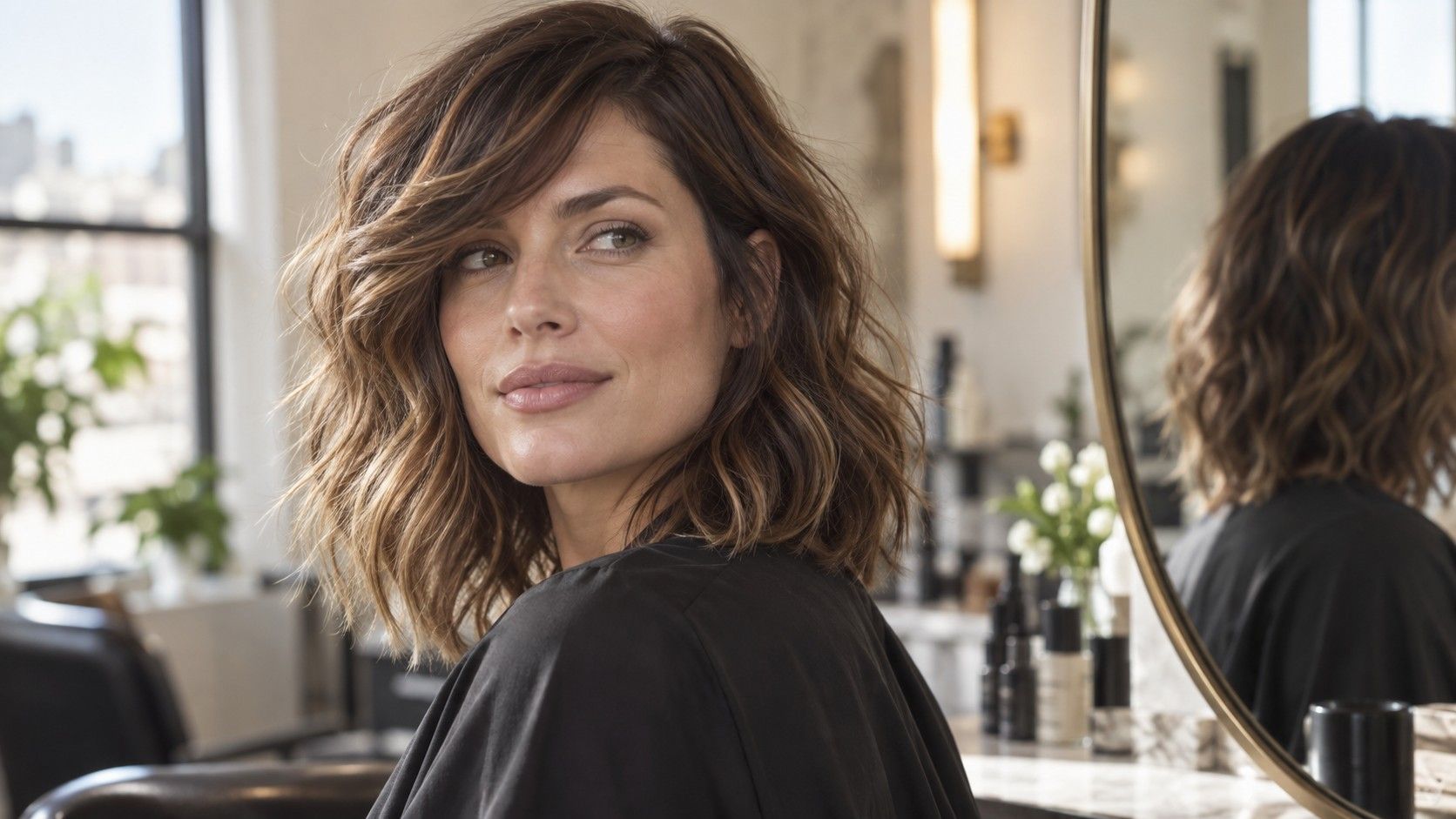
Wavy hair makes soft layers easy to see, but the shortest pieces can spring higher than expected. Cutting face framing around the mouth while wet may place it near the cheekbone when dry. Ask the stylist to refine those pieces after drying. A small amount of styling cream or foam can encourage separation; heavy oil may pull the wave flat and return all the visual weight to the ends.
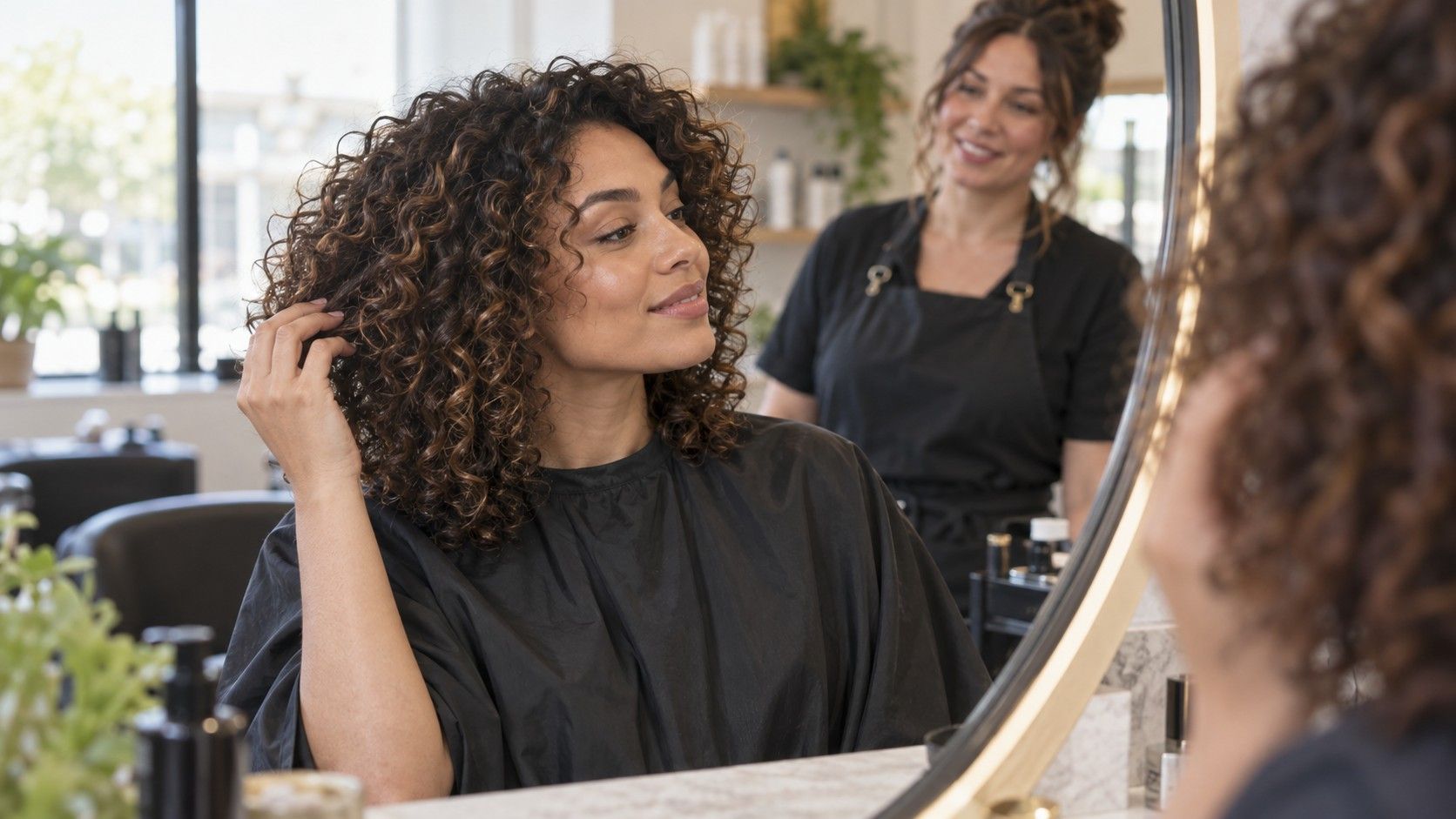
Curly and coily hair needs space for shrinkage and changing curl groups. Rounded volume can sit well around a square face, and a side part can alter the silhouette without removing length. The useful salon conversation is about where the shape expands on wash day two or three. If the cut only works immediately after a professional set, it does not fit the routine.
Bring the decision back to maintenance. Notice how often you use heat, whether you need to tie the hair back, how frequently you will book trims and which products you already tolerate. Softness can come from the cut, the styling or both. Structure can be deliberate rather than harsh. The best result keeps the jawline present, gives the hair a clear shape and still looks like your haircut on an unremarkable weekday morning.