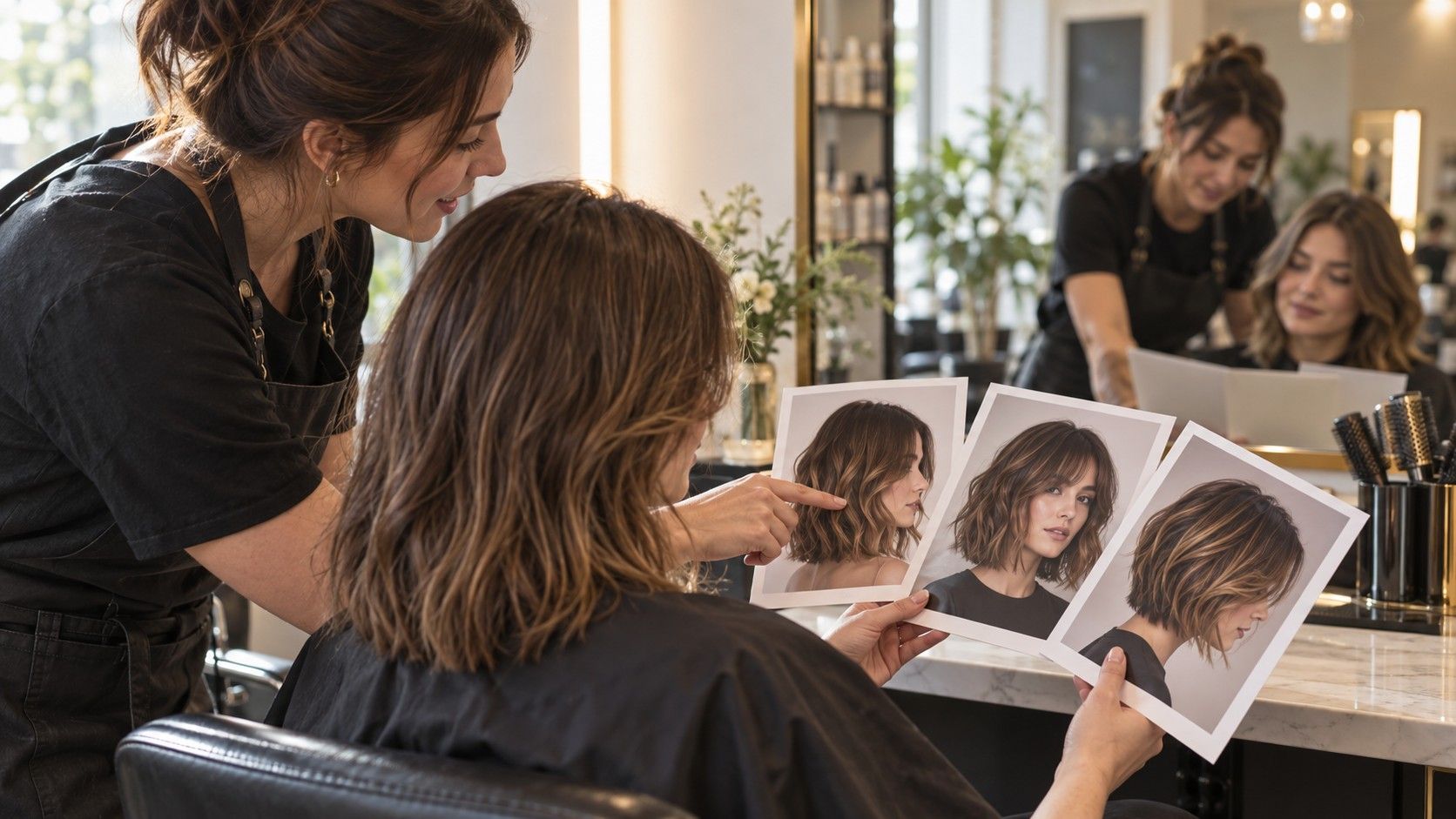
A bob can look like a small change on a salon mood board and a very large change when the back of your neck is suddenly exposed. The useful question is not simply which bob suits me, but where the perimeter should land, how much weight the ends should keep, and what the cut will ask of me on an ordinary Tuesday morning. Choosing well means separating the shape of the cut from the styling in the picture, then matching both to your own texture, neckline and tolerance for upkeep.
Why a few centimetres can change the whole bob
The perimeter is the main piece of architecture in a bob haircut. A line that ends above the jaw exposes more cheek and neck; one that meets the jaw creates a deliberate frame; one that falls two or three centimetres below it usually feels calmer and gives the ends more room to move. Ask a stylist to mark those points with a comb while your hair is dry. Looking straight ahead matters: tipping your chin down can make a proposed jaw-length bob appear longer than it will be when you stand normally.
French, blunt and long bobs solve different problems
Shrinkage also changes the calculation. A loose wave may pull a wet cut upward by a centimetre or two, while curls can lift much farther once their weight is removed. Fine straight hair tends to show the line almost exactly where it was cut, so a tiny difference is obvious. Thick hair may expand around the perimeter unless internal weight is removed. If you wear glasses, high collars or headphones often, notice where the ends meet them. A bob that constantly flips over a coat collar can become irritating even when it looks excellent from the front.
There is no universal ideal point for a jawline. The practical test is whether the edge creates the emphasis you want. Pin or fold the lengths under at three positions, take front and profile photos, and move your head rather than holding a salon pose. Check what happens when the hair falls forward. The most wearable length is often the one that still looks intentional after the tucked side comes loose.
A French bob usually sits around the mouth or jaw and often comes with a fringe or softly broken edge. It gives a compact outline and makes the neck visible, which can feel crisp and expressive. It is less forgiving if your hair grows quickly, has a strong cowlick near the front, or expands at the sides. The reference image may look casual, but that apparent looseness is normally supported by a carefully chosen perimeter and some control at the fringe.
A blunt bob keeps a clear, weighty baseline. It can make fine hair look denser because the ends finish together instead of tapering away. On very dense hair, the same line can form a triangular shape unless the stylist manages weight underneath without shredding the visible edge. A layered bob softens that block and helps waves separate, but excessive short layers can remove the solid swing that attracted you to a bob in the first place. It helps to say whether you want a graphic edge or movement; asking for both without choosing a priority often produces an uncertain middle ground.
The long bob, or lob, generally lands between the collarbone and the upper shoulder. It is the safer option if you want to retain tying capacity, dislike frequent trims or are testing shorter hair for the first time. It will not create the same exposed-neck effect as a French bob, yet it offers more ways to change the parting and lets awkward bends read as texture rather than mistakes. These bob haircut ideas are not levels of bravery. They are different agreements about movement, styling time and how often the shape needs resetting.
| Option | Typical landing point | Useful when | Main trade-off |
|---|---|---|---|
| French bob | Mouth to jaw | You want a compact, exposed-neck shape | Growth and fringe changes show quickly |
| Blunt bob | Jaw to just below | You want a strong edge or fuller-looking ends | Dense hair may need careful weight control |
| Layered bob | Jaw to shoulder | You want wave separation and softer movement | Too many layers can thin the outline |
| Long bob | Above shoulder to collarbone | You want flexibility and partial tying | Less of the sharp, short-bob effect |
Test the jawline and neckline before committing
When learning how to choose a bob, use your real wardrobe and posture as part of the test. Wear the glasses, earrings and jacket collar you reach for most. Put your hair inside the collar at a proposed short length, then pull a little out around the face. A clean jaw-length edge can highlight the jaw, but it can also meet the widest point of the head when thick hair expands. Moving the line slightly above or below that point often matters more than trying to classify a face as round, square or oval.
The profile view reveals details the mirror misses. Check the relationship between the crown, back of the head and nape. A bob can be level, subtly graduated or shorter at the back; each creates a different amount of fullness. Strong graduation may produce a polished stacked effect, but it can feel dated or overly round if that is not what you requested. A nearly level line looks modern and simple, although a very straight neckline may expose every uneven bend at the nape.
Bring a photo of yourself with hair tucked to the proposed length, not only pictures of other people. It gives the stylist evidence of how your ears, neck and hairline interact. Then discuss a margin of safety. Leaving the first cut half a centimetre longer allows refinement after drying; starting too short leaves no such option. This is especially useful with curls, a hidden nape wave or hair that springs outward once the heavier lengths disappear.
Let your parting and texture influence the outline
A bob is cut around a parting even when the parting looks casual. If you alternate between centre and side, tell the stylist and demonstrate both. A severe side part creates more weight on one side, and a blunt line may look uneven when moved back to the centre. A fringe also changes the distribution: curtain bangs blend into the sides, while a full fringe removes hair from the front corners of the bob. Decide whether the fringe is essential to the look or merely present in the reference photo.
Straight hair shows precision, oil and growth quickly. It often benefits from a clean perimeter with restrained internal shaping. Wavy hair needs room for alternating bends; cutting every strand to one visual line can create uneven-looking ends once it dries naturally. Curly hair should be evaluated in its usual curl pattern, including the tighter pieces around the face and nape. The stylist may choose a dry refinement, but the central issue is predictable shrinkage rather than a fashionable cutting label.
Density and strand thickness are separate. Someone can have many fine strands or fewer coarse ones, and the same layered bob behaves differently in each case. Ask where weight will be removed and what the outer line will still look like. Razor work can give airy movement on suitable hair, yet it may encourage frizz on fragile or highly porous ends. Scissors are not automatically safer; the result depends on placement. The useful conversation is about the finish you will see after air-drying, not the tool alone.
Choose the upkeep you will actually maintain
Short, exact bobs advertise growth. A compact French or jaw-length bob may need reshaping around every six to eight weeks if you want the original line to stay sharp. A longer or softer cut can often stretch further because the change reads as additional movement. Fringe maintenance may be more frequent than the main haircut. Before booking, ask what will lose its shape first: the neckline, front corners, fringe or internal volume. That answer gives a more realistic schedule than a generic trim interval.
Daily styling is equally important. A smooth blunt bob may require a directed blow-dry at the roots and ends, particularly if one side turns outward. A textured bob might need only water and a light product refresh, but it can take experimentation to prevent the crown from going flat while the sides expand. Try to describe your normal routine in minutes and tools: air-dry, diffuser, round brush, straightener, or nothing beyond combing. The stylist can then adjust the length and layering to support that routine rather than designing for a finish you rarely reproduce.
Plan the bad-hair-day options too. If tying your hair back is essential for exercise or work, test whether the proposed front pieces reach an elastic; a long bob usually wins here. If you are comfortable with clips, a shorter shape remains manageable, but the back may still escape. Finally, agree on what the grow-out should become. A jaw-length bob can evolve into a soft lob with small perimeter trims, whereas a strongly stacked back needs more active reshaping. The best answer to which bob suits me is the cut whose second and third months still fit your life, not only the first polished afternoon.