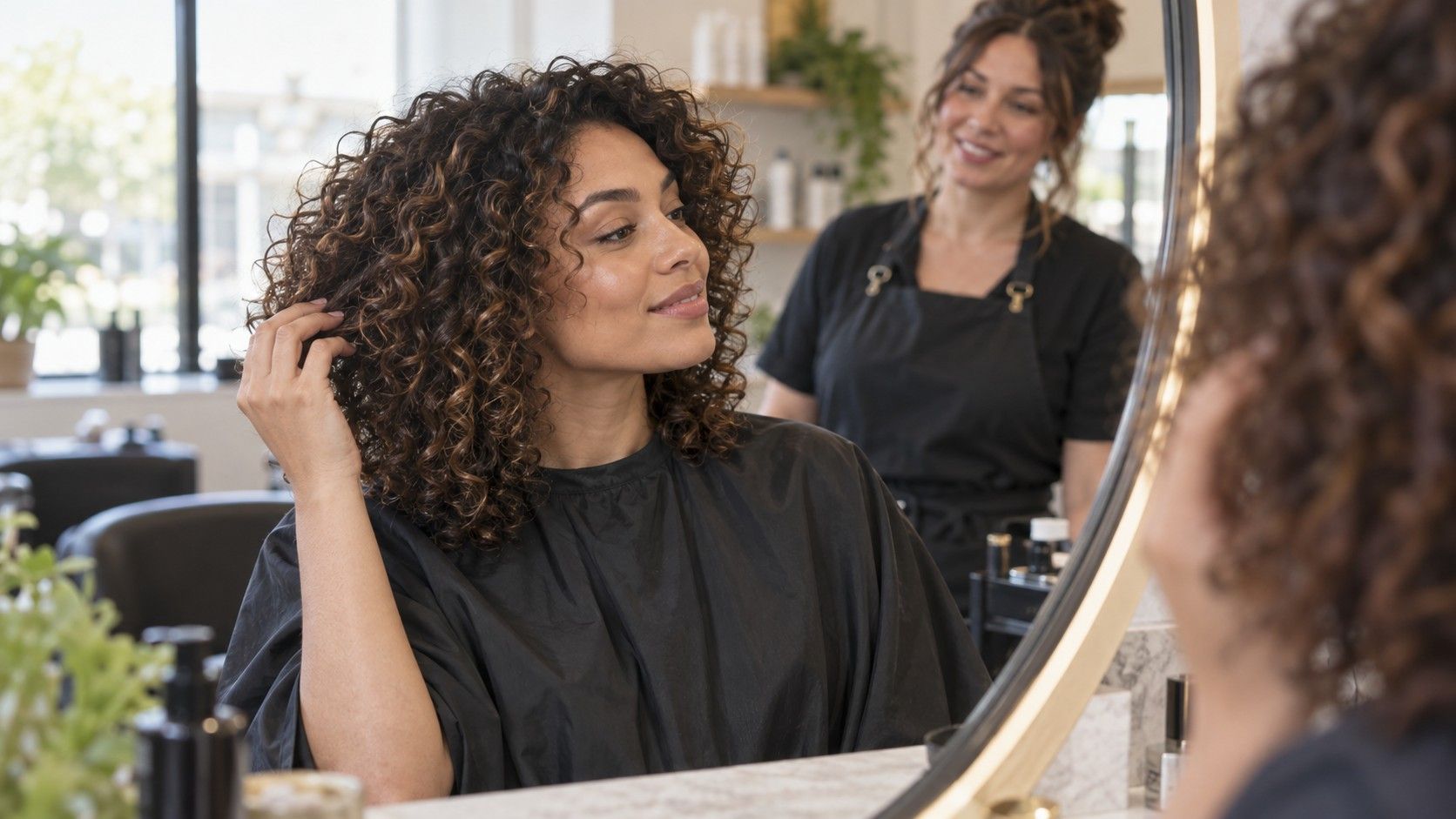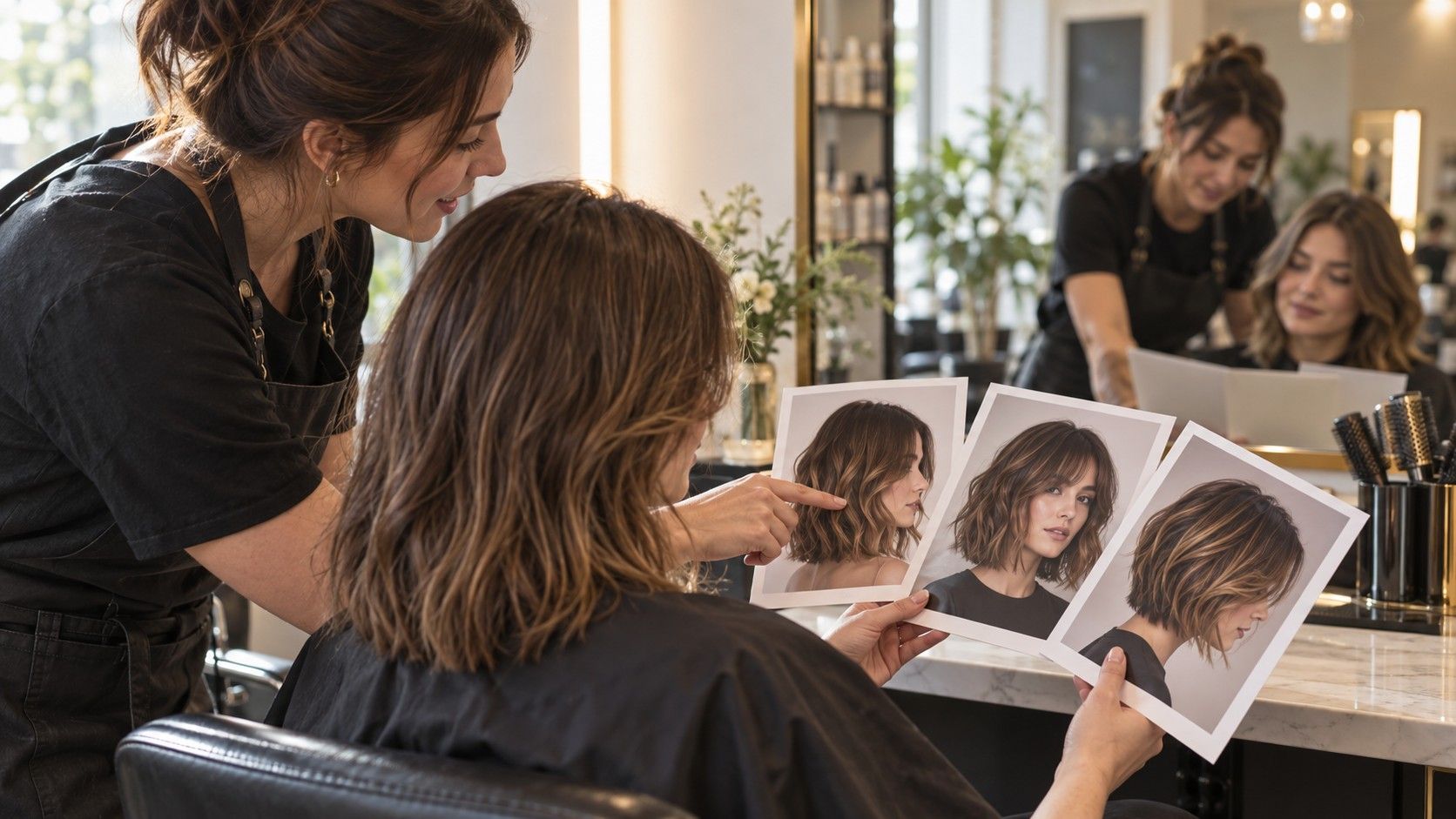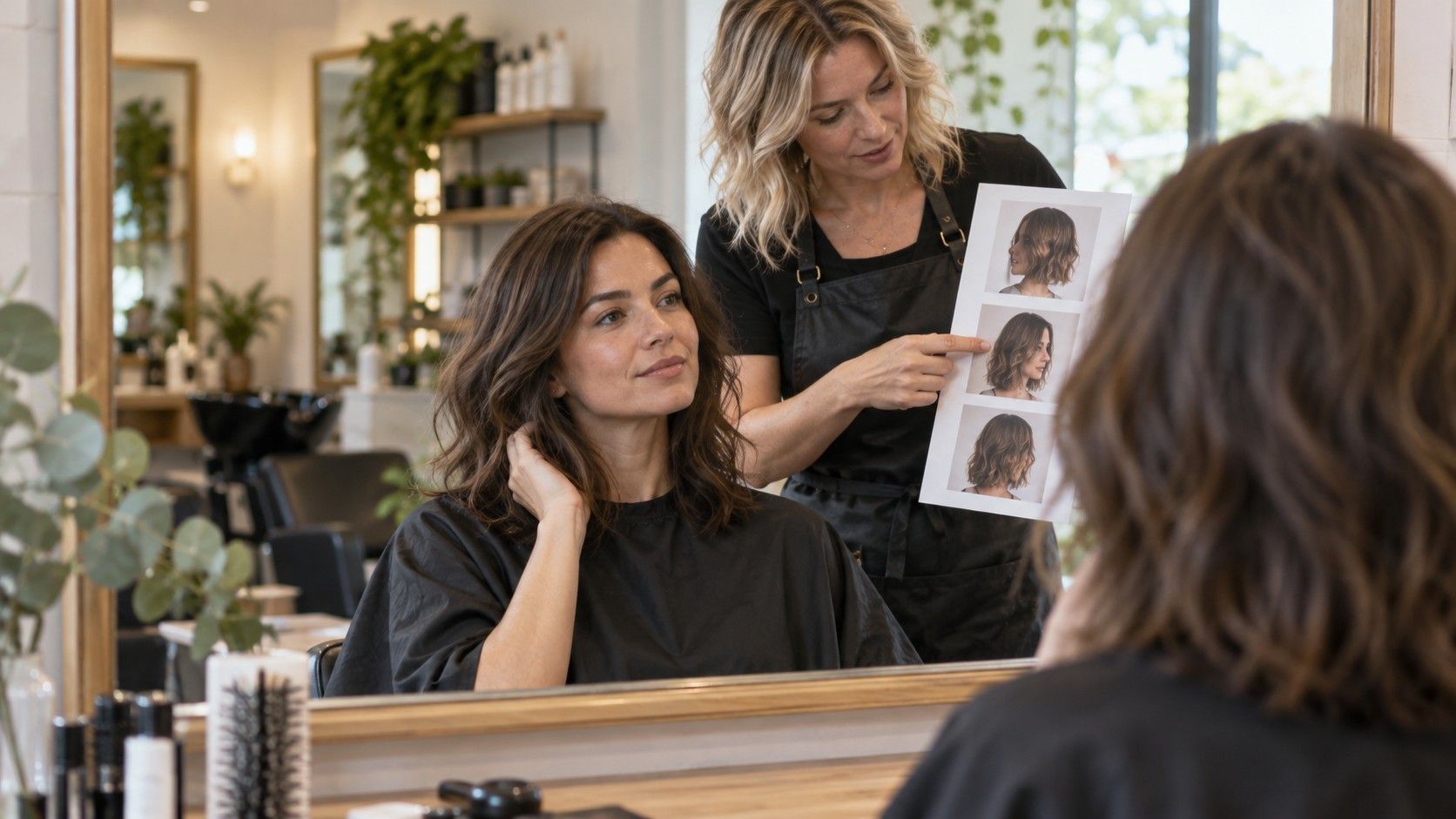
The hardest part of choosing a haircut is not finding a beautiful photo. It is separating the life shown in that photo from the life you actually lead. A polished crop may have taken forty minutes, three products and a stylist standing just outside the frame. A relaxed long bob may depend on hair that dries almost straight. The useful question is therefore not simply which hairstyle suits me, but which shape still works on an ordinary Tuesday when the alarm is late, the weather is damp and nobody is arranging the back of your head for a camera.
Start with the routine you really keep
Before looking at length or face shape, record what happens between waking up and leaving home. If your current routine is a quick brush and a loose tie, a cut that needs a round brush at every wash is a major lifestyle change. That may be a change you want, but it should be chosen deliberately. Time the routine once instead of estimating it. Ten minutes can feel minor on a salon afternoon and rather expensive at 7:20 in the morning.
Decide what you want the haircut to change
Notice how often you wash your hair, whether you air-dry or blow-dry, and which tools you can use without frustration. Someone who washes after a daily workout needs a shape that resets easily. Someone who washes twice a week may tolerate a more deliberate blowout. Glasses, headphones, helmets and a dress code matter too: short pieces around the ears behave differently after an hour under over-ear headphones, while a full fringe can become awkward beneath a cycling helmet.
Hair texture changes the calculation. Fine straight hair may lose an elaborate curl pattern by lunch, while dense waves can turn a neat jaw-length outline into a much wider shape as they dry. Test your natural result on a normal wash day. Let the hair dry with the amount of effort you are honestly prepared to repeat, then photograph the front, both sides and back. Those unpolished pictures are more useful for learning how to choose a hairstyle than a folder of professionally styled references.
People often ask to "choose a haircut" while trying to solve several different problems at once: flat roots, damaged ends, a shape that feels dated, or a desire to look more deliberate. Name the main problem first. Removing damaged length is a different job from creating crown lift, and neither automatically requires a fringe. When the goal is vague, every appealing reference photo seems relevant and the salon conversation becomes a collection of contradictions.
Use recent photographs rather than relying only on the mirror. A mirror reverses the image and encourages close inspection; photographs reveal the outline seen at conversational distance. Compare pictures with the hair tucked behind one ear, with a different parting, and with the ends placed at the jaw, collarbone and chest. The point is not to rank your features. It is to identify which line you prefer and where you want attention to sit.
Change one large variable at a time if you are uncertain. Going from waist-length hair to a textured bob with a full fringe changes length, weight, face framing and daily styling in one appointment. If the result feels wrong, it is difficult to tell which decision caused the problem. A collarbone cut with longer front pieces can test shorter movement first; a soft, longer fringe can test forehead coverage without committing immediately to a blunt line above the brows.
Use face framing as a low-risk test
Face framing is where a small adjustment can change the entire impression of a haircut. Before cutting, imitate the proposed lines. Move the parting by one or two centimetres, pin the front section at cheekbone or jaw level, and leave it there for an hour. Look at it while talking, smiling and wearing your usual glasses, not only while holding still. A line that seems perfect in a front-facing selfie may keep falling into the eyes during conversation.
Parting is especially useful because it changes balance without removing length. A precise middle part creates symmetry and exposes the hairline; a soft off-centre part can add lift on one side without producing an exaggerated sweep. Growth patterns have the final vote. If a strong cowlick pushes the fringe upward, a photograph of a flat curtain fringe is a styling request as much as a cutting request.
For a fringe, test both appearance and behaviour. Clip a section forward, fold the ends under, then check where the hair separates naturally. Full bangs normally need more frequent trimming and more attention after sleep or rain. Curtain bangs are often easier to move aside, but short central pieces can still demand daily resetting. Ask whether the proposed fringe can be tucked behind the ears and how it will sit after six to eight weeks of grow-out.
Long face-framing layers offer a more forgiving experiment. Starting around the chin or collarbone preserves tying options and lets the shorter pieces blend into the perimeter. On curls and waves, judge the starting point on dry hair because shrinkage can move it several centimetres upward. The useful test is not whether face framing looks dramatic at the salon; it is whether those pieces cooperate during the least styled part of your week.
Match length to maintenance and grow-out
Length does not map neatly to effort. Very short hair uses less shampoo and dries quickly, yet its outline may need refreshing every four to six weeks. Long hair can go much longer between shaping appointments, but washing, detangling and drying take more time. A bob can be simple on straight hair and tool-dependent on a texture that expands at the same point. Think about the whole cycle, not just the first week after the cut.
| Length choice | Daily reality | Grow-out question |
|---|---|---|
| Pixie or crop | Fast drying, but shape and direction are visible | Will you book frequent edge and nape clean-ups? |
| Jaw-length bob | Clear outline; may need heat or product to control the ends | Can you tolerate the stage before it reaches a tieable length? |
| Collarbone cut | Flexible for air-drying, waves and tying back | Will shoulder contact make the ends flip in your texture? |
| Long layered hair | More washing and drying time, with many styling options | Can the shortest layers still fit your preferred updo? |
Density matters alongside texture. Removing internal weight can free dense waves, but aggressive thinning may create a fuzzy surface or weak ends. Fine hair often looks fuller with a cleaner perimeter, though a few carefully placed layers can prevent it from hanging flat. Ask the stylist to explain where weight will be removed and what the cut is expected to do when air-dried. That answer is more revealing than a generic label such as "low maintenance."
Plan for month two as carefully as day one. Short layers around the crown may lose their lift as they lengthen. A blunt fringe can cross the brows quickly. A graduated bob may become bottom-heavy before it is long enough to reshape. If appointments are infrequent or the budget is fixed, choose lines that soften rather than collapse during grow-out. Maintenance includes money, booking time and the patience required between ideal stages.
Prepare for a salon conversation
A useful stylist consultation begins with facts: when the hair was last coloured or chemically treated, how it is normally dried, the time available each morning, and the minimum length you need to keep. Show the unstyled photographs alongside the references. Mention previous cuts that caused trouble, such as layers that would not stay in a ponytail or a fringe that split at the hairline. This gives the stylist evidence rather than a request to guess your habits.
Agree on physical landmarks instead of words with flexible meanings. "Short" might mean below the shoulders to one person and above the ears to another. Point to the collarbone, jaw or corner of the mouth. Ask the stylist to show where the shortest layer and perimeter will sit after the hair dries. For curls, confirm whether the agreed length refers to stretched, wet or naturally dry hair.
Then ask three practical questions: what must be styled, what can be left alone, and what happens as the shape grows. A competent answer should include technique, not a promise. It might involve applying a small amount of cream to wet waves, directing the fringe with a dryer for two minutes, or booking a clean-up after six weeks. If the suggested routine already sounds irritating in the chair, it will not become more appealing at home.
Leave room for adjustment. The best answer to which hairstyle suits me is often a sequence rather than a dramatic reveal: establish a manageable length, live with the new balance, then refine the fringe or layers at the next appointment. A haircut earns its place when it still feels intentional after the first wash, works with the tools you own and grows in a direction you can tolerate.