Medium-length hair is often presented as the safe compromise between short and long, but a cut that lands on the shoulders behaves very differently from one that clears them. The most useful medium length haircuts are designed around that contact point, your natural density and the styles you actually wear. A lob, collarbone cut or layered shoulder length haircut can give a noticeable change without removing every familiar option, provided the perimeter and front pieces are planned rather than left as an approximate middle.
Choose the exact landing point before discussing style
Medium length covers several distinct positions. A jaw-skimming long bob still feels relatively short and may not tie back. A cut that ends on top of the shoulders can flick outward as the ends meet clothing. A collarbone cut falls past that obstacle and usually gives enough length for a low ponytail, loose bun or braid. Those few centimetres change both the silhouette and the daily usefulness of the cut.
Compare a lob with a collarbone cut
Pin your hair at each point and turn your head instead of judging only a front-facing mirror image. From the side, check whether the line sits above, on or below the shoulder slope. From the back, notice whether your neck and shoulders are level; a strong natural wave or uneven growth pattern can make a nominally straight perimeter look different once dry. Wear a normal shirt or jacket for this test because collars can push the ends outward.
If keeping an updo matters, gather the proposed length into your usual position. A low tie needs less reach than a high ponytail, and face-framing pieces may escape even when the back is long enough. Tell the stylist which sections must stay secure for work, exercise or childcare. Leaving the front a little longer can be more valuable than preserving an extra centimetre at the back.
A lob is defined more by its bob-like structure than by one universal measurement. It usually has a deliberate perimeter, modest graduation and enough length to move around the shoulders or sit just above them. The line can make fine hair appear denser because the ends collect together. On thick hair, that same line may feel heavy unless some internal weight is removed.
A collarbone cut lands lower and behaves more like shortened long hair. It offers more reliable tying, gives waves room to form and tends to pass through grow-out without an obvious awkward stage. The trade-off is that the visual change may feel less dramatic, especially from the front. If your main aim is a sharper outline, a lob delivers it more clearly; if flexibility matters most, the collarbone is often the calmer choice.
Ask how the back and front lengths relate. A slightly longer front can keep the shape modern and protect the pieces you tuck behind the ears, but a steep angle may be difficult to pull into a ponytail. A one-length collarbone cut is predictable, though very dense hair can form a broad triangular outline. Subtle graduation at the back changes the curve without turning the haircut into a stack of obvious layers.
Add layers only for a specific reason
Layers are useful when they solve a visible problem: too much weight at the bottom, a flat crown, waves that cannot form, or a solid perimeter that feels static. They are less useful as a vague request for movement. The position of the shortest layer determines whether the cut feels full, shaggy or thin at the ends, so point to that position rather than asking for lots of layers.
Fine or low-density hair usually benefits from keeping the lower perimeter substantial. Long, restrained layers can release some movement without leaving the last few centimetres transparent. If the shortest pieces begin too high, the crown may gain lift while the bottom loses the very density that made medium-length hair attractive. Check the finished edge against a light background; it should not disappear unless a deliberately airy result was requested.
Thick hair may need more internal work, particularly behind the ears and through the back. Removing bulk is different from shredding the ends. A stylist can use graduation, carefully placed layers or internal sections to help the hair fold closer to the head while preserving a readable outline. Ask what the technique will look like after two months, when short internal pieces can begin to push longer hair outward.
For waves, the pattern matters more than the category printed beside a reference photo. A layer ending at the bend of a wave can encourage shape; one ending between bends can create an uneven shelf. Let the hair dry in its usual way before final refinement. If you alternate between natural waves and straight styling, the layers need to look connected in both states rather than being perfect for only one finish.
Place face framing and fringe where they can function
Face-framing pieces can make medium hairstyles feel new even when most of the overall length stays. Start with a practical boundary: the shortest piece should still reach wherever you need it to go. Chin-length sections tuck behind many ears but can fall from a ponytail. Cheekbone-length pieces create a stronger frame, while a curtain fringe brings the change closer to the eyes and needs more deliberate root styling.
A curtain fringe should connect to the rest of the cut. If the shortest centre pieces end near the brows and the next visible layer begins at the collarbone, the gap can look accidental. Stepped lengths through the cheekbone and jaw create a transition, though each shorter section reduces what will stay in an updo. People who dislike hair touching the face may prefer framing that begins below the chin rather than committing to a true fringe.
Test movement, tying and styling on an ordinary day
The appeal of medium-length hair is that it can move between polished and casual styles, but verify the options that matter to you. Test a low ponytail, half-up style, loose bun and the way the hair sits under a coat. A shoulder length haircut may technically tie back while shedding half the front within ten minutes. A collarbone cut usually holds more securely, yet dense layers can still create short pieces around the nape.
Drying time remains closer to long hair than to a bob, especially with dense or porous texture. The ends may need attention because they rub against shoulders, scarves and straps. If you air-dry, check whether the shoulder line encourages an outward flip. If you blow-dry, a medium round brush can smooth the perimeter, but it may also add a curve that disappears in damp weather. Choose a shape that remains acceptable when styling is imperfect.
Heat styling reveals another trade-off. Long layers and a collarbone perimeter give curling tools enough room to form loose waves, while a shorter lob may produce a more pronounced bend. Very thinned ends can look sparse when straightened, and a heavy one-length cut can resist a relaxed wave. Show the stylist both the texture you wear most and the occasional finish you still want available.
Plan maintenance around the ends, not a trend cycle
Medium-length cuts are forgiving, but they are not maintenance-free. A precise lob loses its intended line as the back reaches the shoulders and begins to flip, often making a trim useful around eight to twelve weeks. A softer collarbone cut can go longer if the ends remain healthy. Fringe and short face framing may need attention sooner than the main perimeter, so ask whether those pieces can be trimmed separately.
The condition of the ends determines whether the haircut looks deliberate. Fine hair can develop a thin, uneven edge from friction, while curly or bleached hair may become dry before it appears visibly split. Regular small trims preserve the line without repeatedly returning to the original short point. If growing the hair longer is a likely next step, keep the internal layers long enough to blend as the perimeter descends.
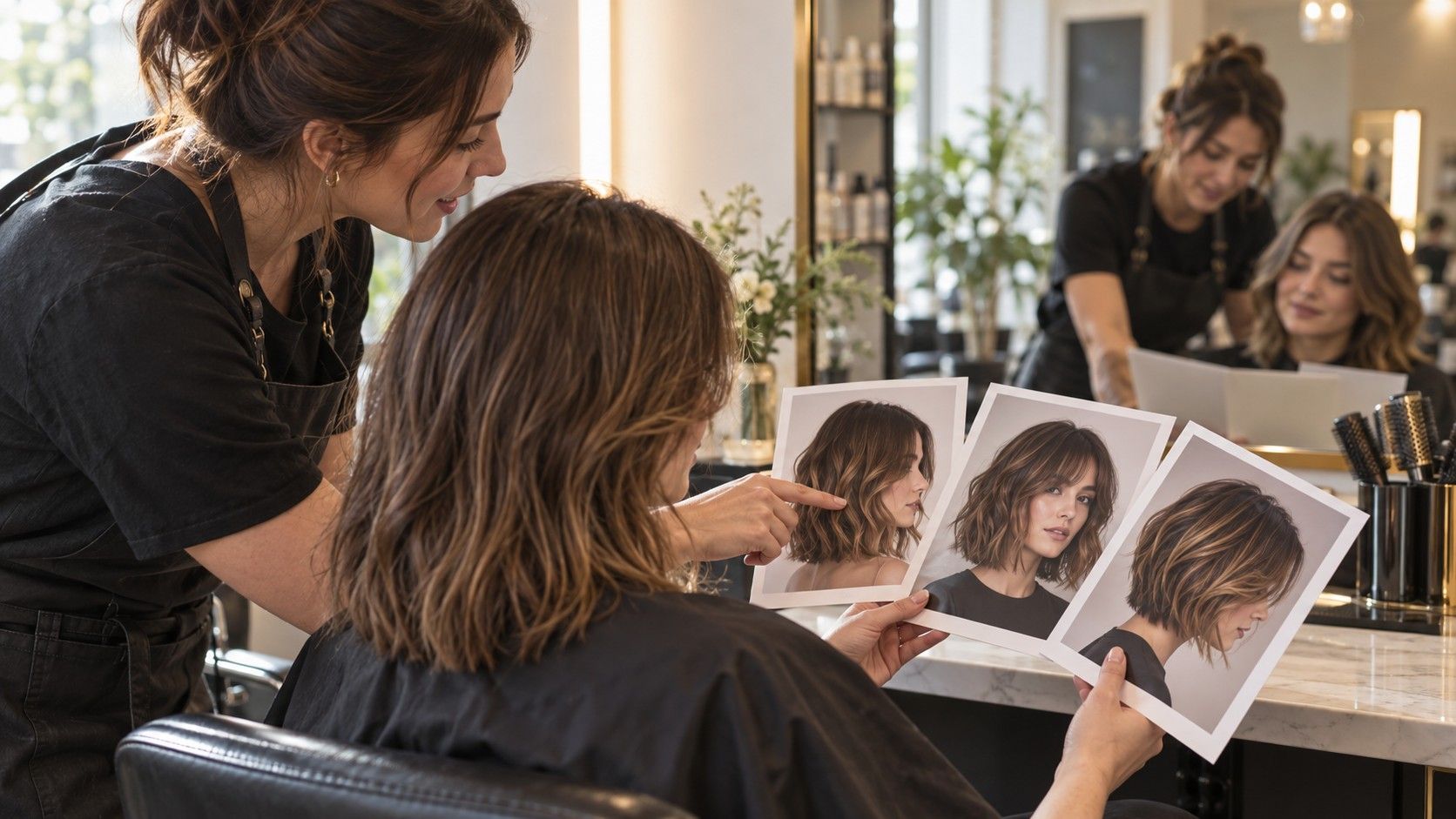
Bring two kinds of reference to the appointment: a result you like and one that shows what you do not want. Mark the landing point, shortest layer and shortest front section on your own body. Then explain your non-negotiables, such as a secure ponytail, no daily heat or enough weight to control frizz. That conversation is more reliable than choosing whichever medium hairstyles appear newest.
A medium cut works best when it keeps the options you value and removes the length that has become inconvenient or shapeless. For a sharper visible reset, choose a structured lob above the shoulder. For easier tying and a quieter grow-out, stay near the collarbone. Add layers or curtain fringe because they solve a specific issue, not because medium-length hair is assumed to need them. The result should still make sense after the salon finish has gone and your normal routine has returned.