The shag and the wolf cut live in the same family, which is why salon references often blur the names. Both rely on layers, texture and movement, but they place weight in different areas. The difference becomes obvious at home: one may settle into soft, distributed movement while the other needs its short crown and longer tail to stay visibly separate. Instead of choosing between a shag vs wolf cut by trend or label, look at the silhouette from the side, the amount of hair left at the ends, and the work needed to restore the shape after sleep, humidity or a hurried wash.
The actual difference appears in the silhouette
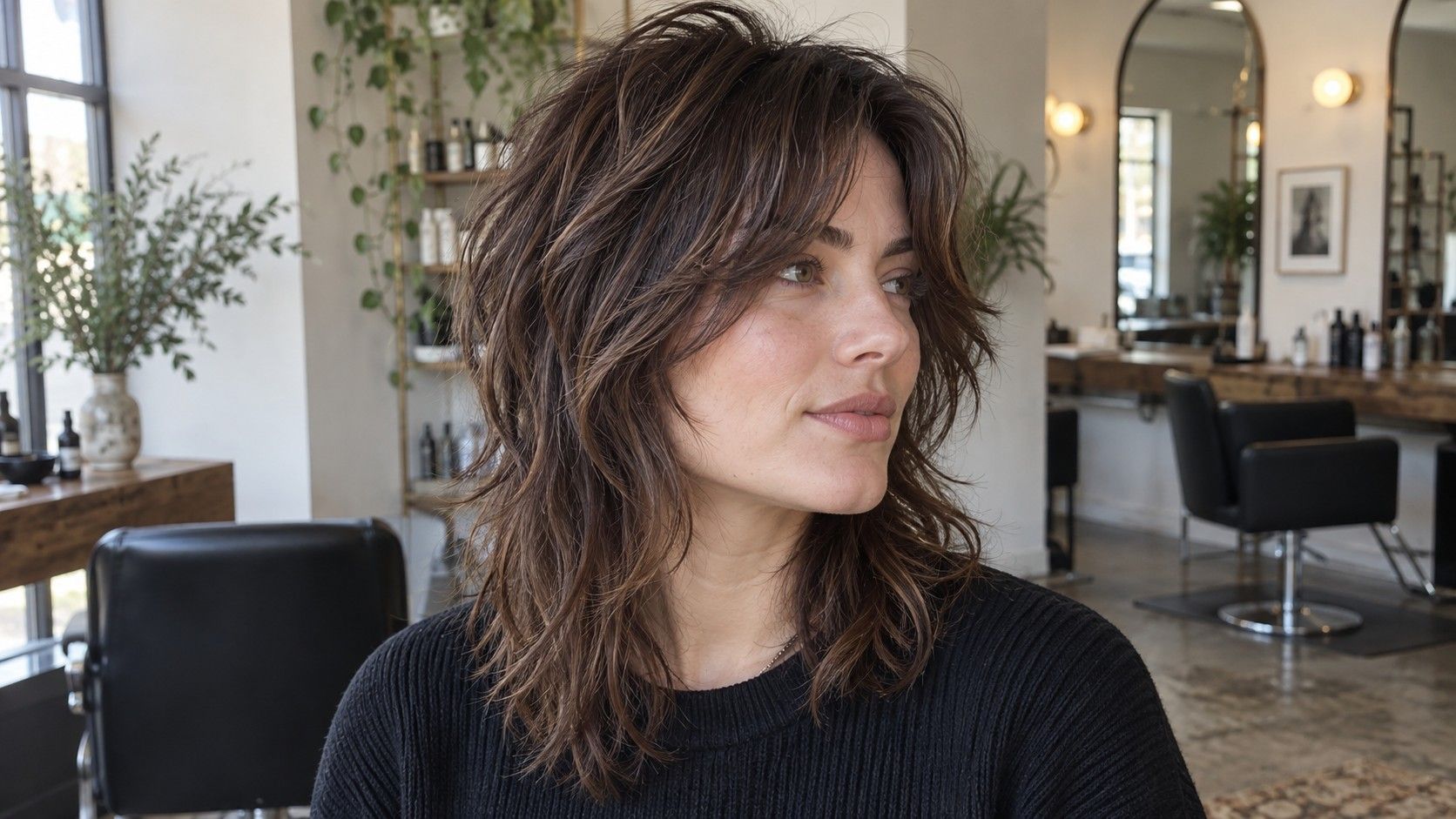
A traditional shag haircut spreads layers through the whole shape. The crown is lighter, the middle lengths have movement, and the ends usually remain connected enough to swing rather than hang as a separate tail. The outline can be short or long, polished or rough, but the transitions tend to feel continuous. From the side, you see lift and irregularity without necessarily seeing two distinct zones.
Crown volume has to match density and growth patterns
A wolf cut haircut usually exaggerates the contrast. Shorter, fuller layers sit around the crown and upper sides, while noticeably longer pieces continue toward the shoulders or back. That separation borrows something from a mullet shape without requiring a severe cropped front. The result can look rounded above and narrow below. If a reference has dramatic crown volume and wispy ends, the cut is probably relying on this disconnection, even when the caption simply calls it a shag.
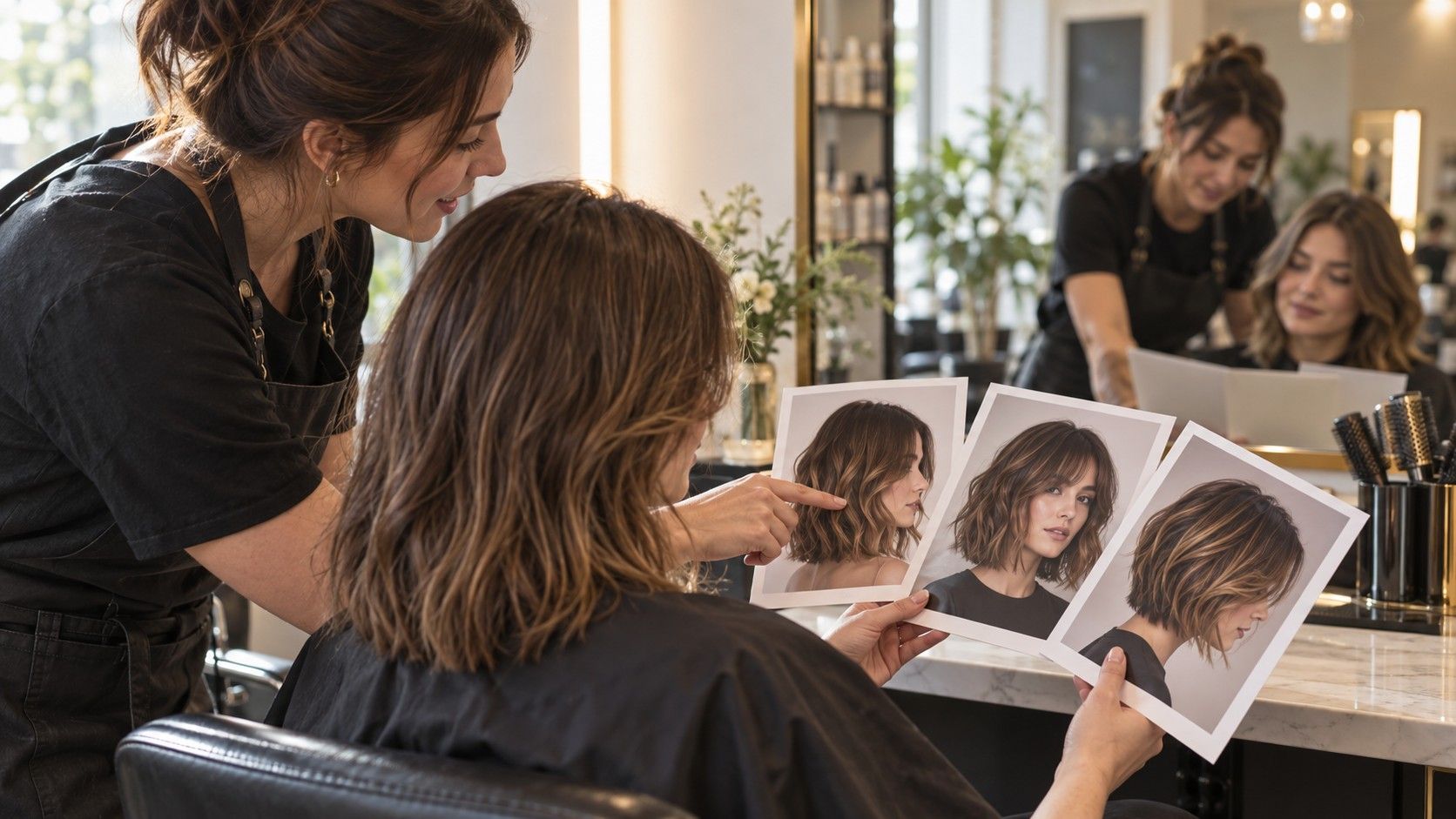
Ask your stylist to show where the shortest crown layer will fall and how it connects to the longest perimeter. Those two points matter more than the name. A crown layer near the cheekbone creates strong lift and a visible step; one near the shoulder produces a softer shag effect on long hair. Likewise, leaving a dense perimeter keeps the cut grounded, while heavily tapering it pushes the result toward a sharper wolf or mullet-inspired outline.
| Decision point | Shag haircut | Wolf cut |
|---|---|---|
| Overall shape | Layers distributed through the length | Fuller crown with a narrower lower section |
| Ends | Usually connected and mobile | Often lighter, wispier and more separated |
| Daily finish | Can read as soft or lived-in | Needs contrast to remain recognisable |
| Grow-out | Tends to blend gradually | Short top and long back may need rebalancing |
How the layers behave when you style at home
The salon finish can disguise the daily demands of both cuts. A stylist may use a diffuser, several brushes and deliberate bends to reveal every layer. At home, a shag often tolerates a less exact routine because its movement is distributed. With a light product and a quick scrunch, imperfect bends can join the intended texture. Very straight hair may still need a round brush or iron at selected sections so the layers do not collapse into a thin, feathery outline.
A wolf cut depends more heavily on crown lift. If the roots dry flat, the longer lower section remains visible but the characteristic upper shape disappears. This does not always mean lengthy styling: clipping the roots while air-drying, diffusing upside down for a few minutes, or directing a dryer against the growth pattern can be enough. Yet someone who dislikes any root work should choose a less extreme crown difference. The cut cannot permanently manufacture volume that the hair and routine do not support.
Product choice should follow strand behavior, not the haircut name. Fine hair can lose its lift under heavy cream or oil, so a small amount of foam or light texture spray is easier to control. Coarse waves may need more moisture before a styling gel can hold definition. On straight, slippery hair, too much texturizing can make the ends look tired rather than deliberately piecey. Ask the stylist to demonstrate the minimum routine on damp hair and note which step creates the shape. If the answer requires four products and hot tools, include that fact in the decision.
Density changes the risk. Thick hair gives a wolf cut enough material to create a full upper section and still retain a visible lower length, but careless removal can leave the ends surprisingly sparse. Fine hair can gain movement from a shag haircut, although very short crown layers may expose the scalp or make the perimeter look depleted. In both cases, the stylist should evaluate how much hair is present at the temples, behind the ears and at the back rather than treating density as uniform.
Growth patterns are equally decisive. A crown swirl may lift one section and flatten another; short layers can either cooperate with that movement or stand up unpredictably. A cowlick at the front affects how curtain bangs split, while a strong nape pattern can flip the longer pieces. Arrive with hair close to its usual state so these details are visible. A freshly straightened consultation hides the very behavior the cut must manage.
There is a useful physical test: gather the proposed lower section in one hand while a stylist lifts the hair that would become crown layers. Look at how much remains in each zone. If the bottom already feels thin, preserve more weight and choose a connected shag. If the crown feels heavy and collapses despite natural wave, a stronger wolf shape may release useful volume. This is a more reliable way to choose than deciding that thick hair always needs thinning or fine hair should never be layered.
Bangs and natural texture can shift the cut either way
Curtain bangs are common in both styles, but their connection changes the impression. In a shag, they usually flow into cheekbone and jaw layers, making the front feel like part of one continuous frame. In a wolf cut, the fringe can sit inside a shorter upper cap and emphasize the contrast with the back. A full blunt fringe creates a stronger graphic boundary; wispy pieces make the cut lighter but may separate into strings on oily or very fine hair.
Before adding bangs, check the shortest length you can tolerate and whether you are willing to wet or restyle them each morning. A fringe pressed flat by sleep rarely recovers through dry brushing alone. If you wear glasses, test where the curtain pieces meet the frames. If you tuck hair behind your ears for work, make sure the chosen side sections can reach. These ordinary gestures influence whether face-framing layers feel useful or constantly fall forward.
Waves and curls supply visible texture without forcing every section with a tool, though shrinkage makes the layer map less predictable. A tight curl at the crown may spring much shorter than a loose curl at the back. Straight hair offers a clearer graphic silhouette, but it often needs styling to prevent short layers from lying flat against long ones. A good reference should show hair close to your natural pattern and density. The cut can organise texture; it cannot exchange one texture for another.
Think through the grow-out before choosing the drama
A connected shag generally grows with fewer obvious stages. As crown layers lengthen, they blend into the middle and the perimeter becomes heavier. Trims can refresh the face frame or remove dry ends without rebuilding the entire shape. This flexibility suits someone who visits a salon irregularly or changes between textured and smooth styling. It also makes the shag easier to redirect into a long layered cut.
A pronounced wolf cut has a more specific grow-out. The short upper section becomes a medium layer while the back keeps extending, which can shift the volume downward and exaggerate the tail. Around the third or fourth month, you may need either to shorten the perimeter, re-cut the crown or accept a more obvious mullet shape for a while. None of those options is inherently bad, but choosing in advance prevents the familiar moment when the original photo no longer explains what the hair is doing.
Maintenance is not only the interval between cuts. It includes fringe trims, detangling delicate tapered ends, protecting the shortest layers from heat, and having a fallback on flat days. A shag can usually be tied partly back if it is long enough, though face-framing pieces escape. A wolf cut may leave too much short hair at the crown for a smooth ponytail. Try the motions you rely on for exercise, work or sleep before deciding how short the top should be.
The practical answer to shag vs wolf cut rests on contrast. Choose a shag when you want movement across the entire haircut, a gentler transition and a forgiving grow-out. Choose a wolf cut when you genuinely want the crown and lower length to read as separate shapes and are willing to preserve that distinction. If you like the energy of the wolf reference but not its maintenance, ask for a shag with shorter crown layers and a solid perimeter. The useful result is not the purest label; it is a layer map that still makes sense after you wash it yourself.