Going short is often framed as one dramatic decision, but a pixie, bixie, crop and jaw-length bob have little in common once you live with them. The useful way to compare short hairstyles is to study what remains around the ears, nape and face, then match that shape to your density and routine. If you keep asking should I cut my hair short, replace the imagined makeover with a few ordinary scenes: waking up, getting caught in rain, going six weeks between appointments and trying to pull the front out of your eyes.
Work out what shorter length will expose
Longer hair creates a continuous outline around the shoulders and can be moved from one side to the other. Short hair makes the perimeter much more specific. The ear may be fully visible, partly covered or framed by a pointed side section. The neckline might be softly tapered, sharply clipped or left with enough weight to curl. Small choices that disappear in a long haircut become the main architecture of a short one.
Compare pixie, bixie, crop and bob by structure
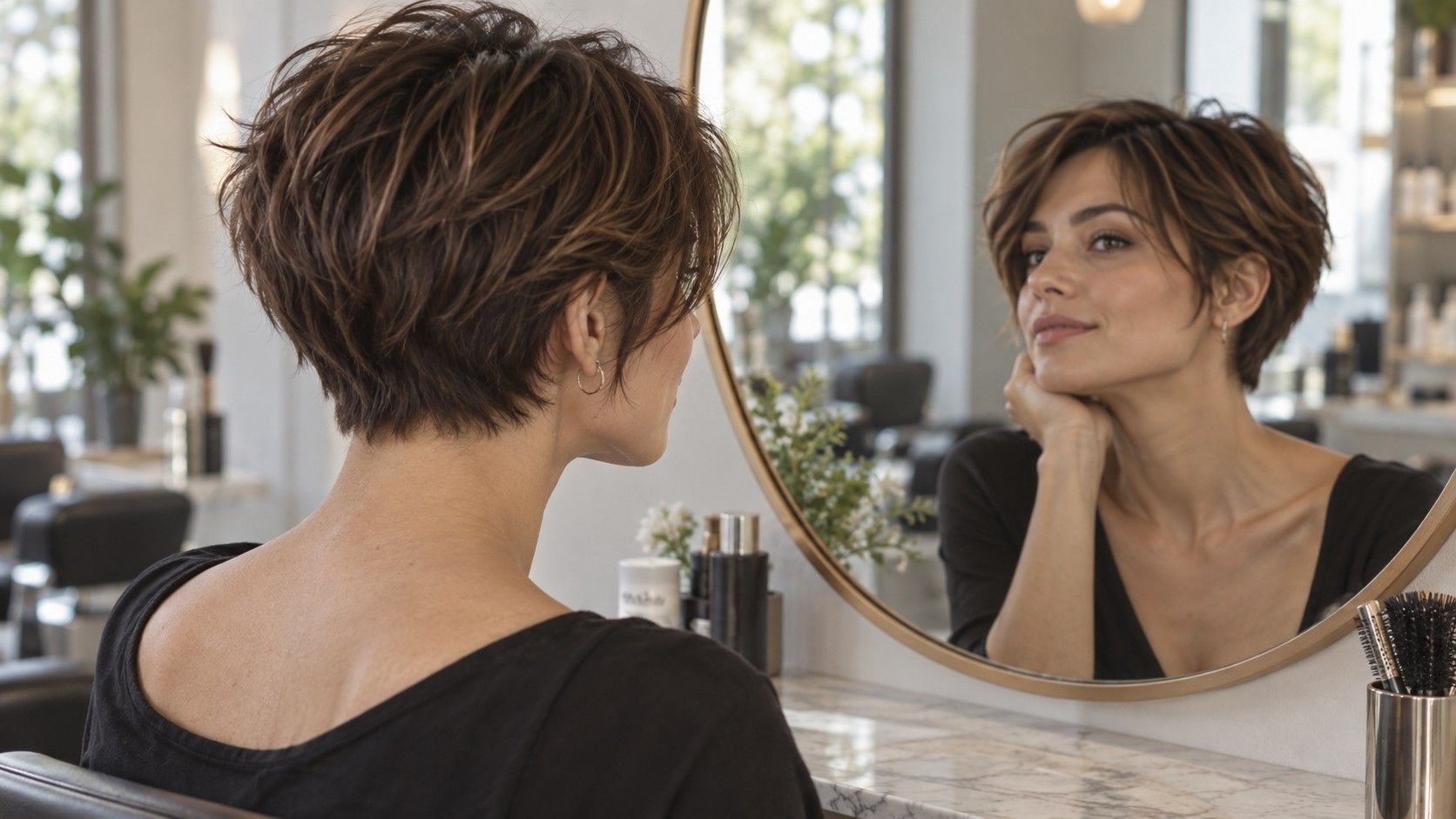
Use two mirrors or record a slow phone video from the front, side and back with your hair pinned to several lengths. Do not judge only the familiar front view. A cut that feels balanced in a selfie can look top-heavy in profile if all the volume sits above the ears, or severe from behind if the nape is cut much tighter than expected. Notice your head shape, hairline at the neck and any areas where growth changes direction.
Shorter hair also brings accessories and clothing closer to the visual line of the cut. Glasses sit beside the temples, earrings are less hidden, and a high collar can push a bob outward. None of this creates a rule about who can wear short hair. It simply explains why the same photograph can produce a different impression on someone whose daily wardrobe, frames and natural volume are different.
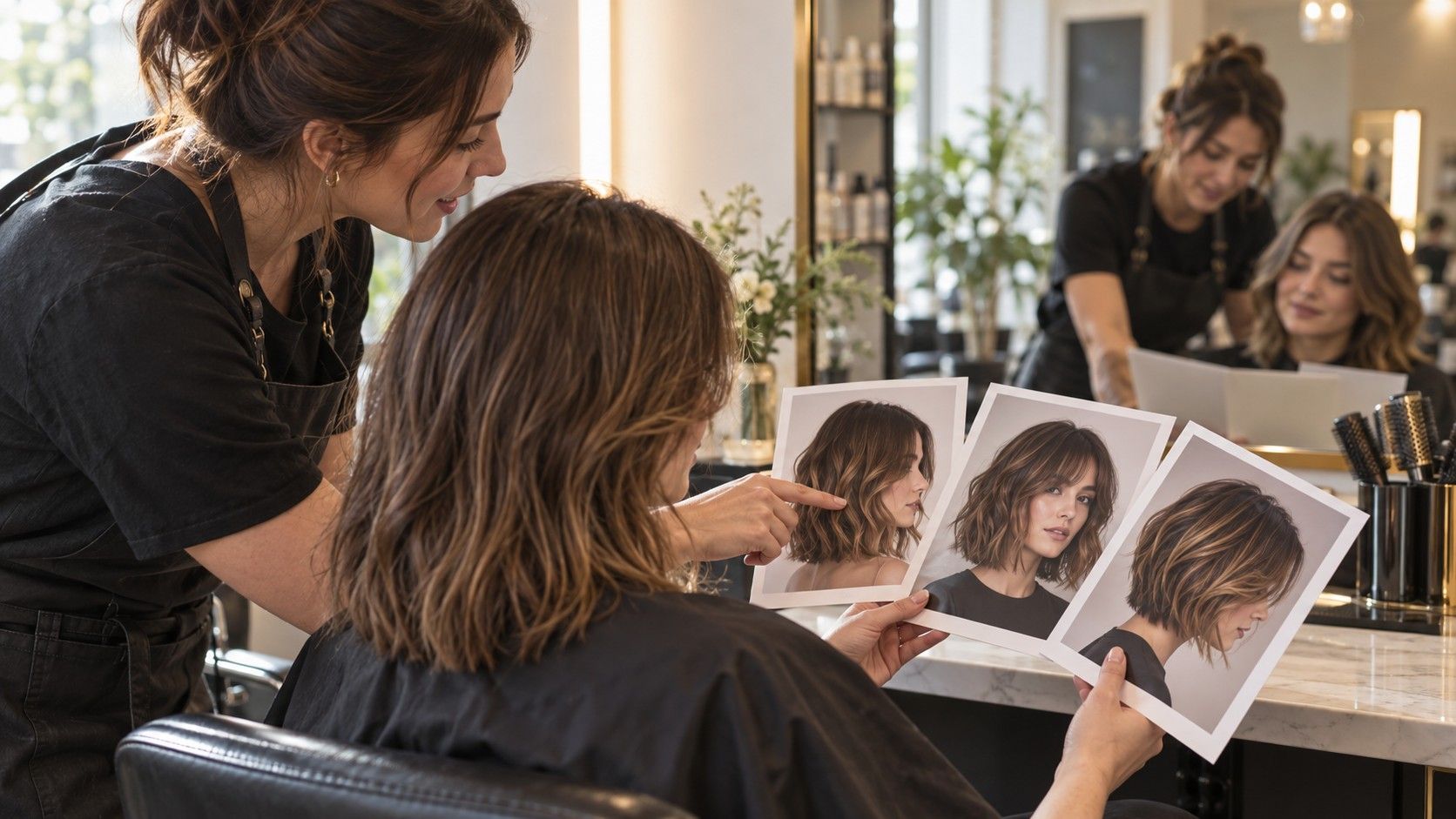
Names vary between salons, so treat them as a way to begin the conversation rather than as a complete instruction. Bring references for the front, side and back, preferably showing hair with a texture close to yours. Then identify the structural differences.
| Cut | Typical shape | Styling reality | Grow-out clue |
|---|---|---|---|
| Pixie | Short sides and nape with controlled length on top | Fast to dry, but direction and separation often need product | Sides lose shape before the top reaches a useful length |
| Bixie | Pixie proportions with more bob-like weight and movement | Allows texture, tucking and a softer edge around the ears | Can progress toward a short bob with planned perimeter trims |
| Crop | Compact silhouette with a short fringe or textured front | Needs frequent shaping if the outline is precise | The fringe and crown may become bulky at different times |
| French or jaw-length bob | A visible line around the jaw, with or without fringe | May air-dry well, though bends at the nape can alter the line | Usually grows toward a conventional bob without a major reset |
A pixie gives the biggest change because it removes the option of tying the hair back and places attention on the crown, temples and neckline. A bixie keeps more softness at the perimeter, which can help if you want short haircut ideas without a closely cut nape. A crop is compact and deliberate; its apparently casual texture is often created with a small amount of paste and careful finger placement.
The French bob and jaw-length bob preserve a recognisable curtain of hair around the face. They are less exposed than a pixie, yet they are sensitive to exact length. A line landing at the widest point of the jaw feels different from one sitting a centimetre below it. If the back rests on the collar or flips at the nape, the silhouette can shift from clean to triangular by lunchtime.
Check the neckline, ears and side profile
Decide how much of the ear you want visible. A clean curve over the ear feels neat and open; a longer side section can soften the transition but may need tucking. If you wear glasses, check where the arms meet the hair. Dense pieces cut directly over that point can lift away, while very short temple sections may expose a hairline you are not used to seeing.
At the nape, ask to see examples of a natural taper, a cropped finish and a soft bob line. Fine hair may benefit from keeping enough weight to avoid a transparent edge. Dense hair can puff away from the neck unless the internal shape is controlled. Strong swirls at the nape tend to reassert themselves after a few weeks, so an extremely precise line may require more frequent clean-ups than the top of the haircut.
The side profile reveals whether the cut has intentional balance. Look at the relationship between crown volume, fringe length, cheekbone and occipital curve at the back of the head. If every reference is photographed only from the front, it is not enough information for a major cut. A stylist needs to know whether you want a rounded head-hugging shape, a flatter crown, a longer front or a defined step around the jaw.
Let density and texture choose the technique
Fine hair is often described as ideal for short styles because less length can make it appear fuller. That can be true, but aggressive thinning or too many short layers may expose the scalp and leave the ends feathery. A compact bob with a firm baseline can preserve visible density; a pixie may work better with strategically longer sections across the crown rather than uniformly short pieces.
Dense hair has the opposite problem. Removing length does not remove bulk automatically. In a bob, weight can collect at the lower edge and create a bell shape. In a pixie, a thick crown can stand higher than expected. Internal debulking, undercut areas or graduated layers may help, but each changes the way the cut grows. Ask where weight will be removed and what the silhouette should look like after four weeks, not only when freshly styled.
Waves and curls need dry-state planning because spring and shrinkage vary around the head. A jaw-length wet section may settle much higher once dry, particularly near the temples. Straight hair exposes every inconsistency in a strong perimeter, while coarse straight hair can project outward instead of folding neatly under. Bring your hair to the appointment in its usual condition so texture is visible rather than ironed into temporary obedience.
Calculate the real daily styling time
Short does not always mean wash and go. It usually means less drying time but more attention to direction. A pixie can develop a flattened side after sleep, a crop fringe can split, and a bob can bend where it touches the neck. Before cutting, notice how much effort you already spend correcting roots and whether you are willing to wet or restyle sections in the morning.
Products behave more visibly on short hair because a small amount reaches a large percentage of the length. Wax can define a crop but turn fine hair greasy; salt spray can encourage texture but leave coarse ends dry; a round brush can polish a bob but may create more volume than you want. Ask the stylist to demonstrate with the smallest useful amount and watch where it is applied. A salon finish that requires four products is not a minor detail if you normally use none.
Test the lifestyle constraints that photographs omit. Can the front stay out of your eyes during exercise? Will a helmet flatten the crown? Does your job require all hair to be secured? A jaw-length bob may be too short for a ponytail yet long enough to swing forward, while a pixie solves the tying problem but cannot be hidden on a difficult hair day. Practical friction matters more than whether the cut has been labelled flattering.
Make a maintenance and grow-out plan
The clean geometry of many short hairstyles depends on timing. A precise pixie or crop may need reshaping every four to six weeks; a softer bixie or bob can often stretch longer, although the nape and area over the ears may become untidy first. Salon frequency is part of the cost of the haircut. If appointments are difficult to schedule, choose an outline that remains intentional as it expands.
Grow-out is not simply waiting. Pixies often pass through a stage where the top is long but the sides are still too short to join a bob. Strategic trims can remove bulk at the back while preserving front and side length. A bixie has a more direct route to a bob, but the shape may need rebalancing so it does not become a mullet by accident. A jaw-length bob has the simplest path toward shoulder length, provided the ends stay healthy.
If you are still unsure, make the first cut a measured step. Move from long hair to a collarbone cut, or from a lob to a jaw-length bob, and live with the exposed neckline before going to a pixie. That is not a failure of nerve; it is useful information. The best answer to should I cut my hair short comes from knowing which short silhouette you want, what your texture will do and how you plan to handle both week one and month four.